172. Solving Equations Using Graphs
Learning Intentions
- Recognise that each point on a Draw represents a solution to an equation relating
and - Understand that the point of intersection of two straight lines is the only solution that satisfies both equations
- Solve a linear equation Use a graph
- Solve an equation with pronumerals on both sides using the intersection point of two linear graphs
Pre-requisite Summary
- A point on a graph is written as an ordered pair
- A point lies on a graph if its coordinates make the equation true when substituted
- A linear equation in
and can be represented by a straight-line graph - A table of values can be used to plot points for a linear rule
- Two graphs may cross at a single point called the point of intersection
- The coordinates of the intersection satisfy both equations at the same time
- To solve an equation using graphs, it is helpful to rewrite it as two matching linear rules
Worked Examples
Worked Example 1
Determine whether each point lies on the graph of
a)
b)
c)
Worked Example 2
Draw graphs for
Worked Example 3
Construct graphs for
Worked Example 4
Solve
Worked Example 5
Construct graphs for
Worked Example 6
A student says the solution to
Use the graphs of
Problems
Problem 1
Determine whether each point lies on the graph of
a)
b)
c)
Problem 2
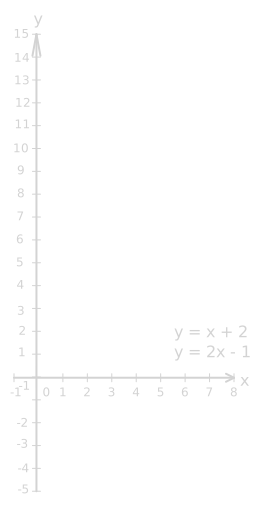
Construct graphs for
Problem 3
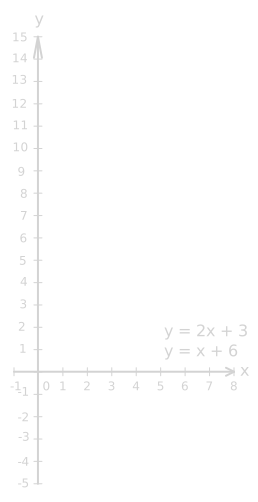
Construct graphs for
Problem 4
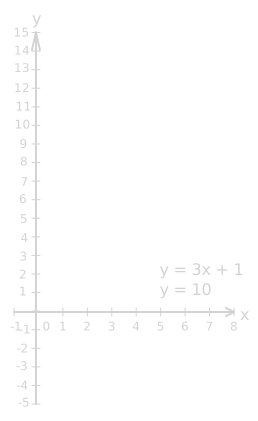
Solve
Problem 5
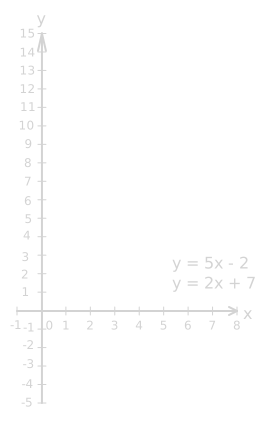
Construct graphs for
Problem 6
A student says the solution to
Use the graphs of
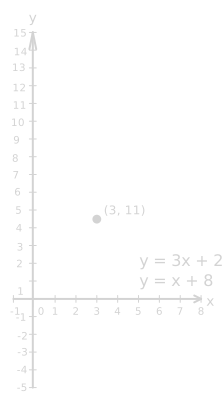
Exercises
Understanding and Fluency
Exercise 1.
Decide whether each point lies on the graph of the given equation.
a) For
b) For
c) For
Exercise 2.
Decide whether each point lies on the graph of the given equation.
a) For
b) For
c) For
Exercise 3.
Construct tables of values and graph the pairs of rules. Then State the intersection point.
a)
b)
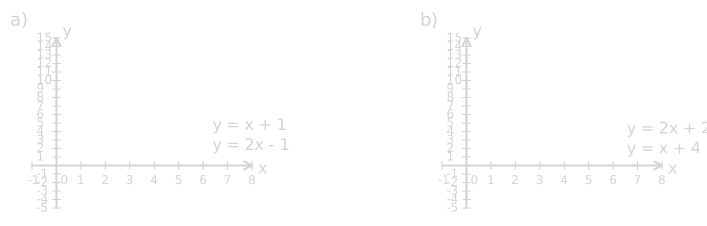
Exercise 4.
Construct tables of values and graph the pairs of rules. Then state the intersection point.
a)
b)
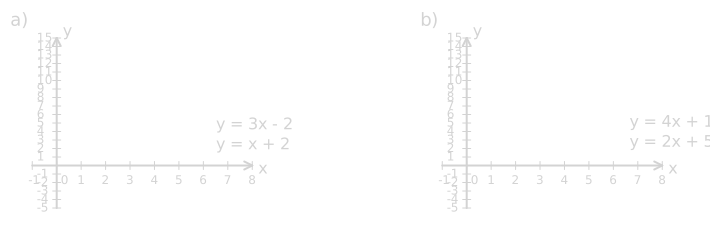
Exercise 5.
Solve each equation by graphing a line and a horizontal line.
a)
b)
c)
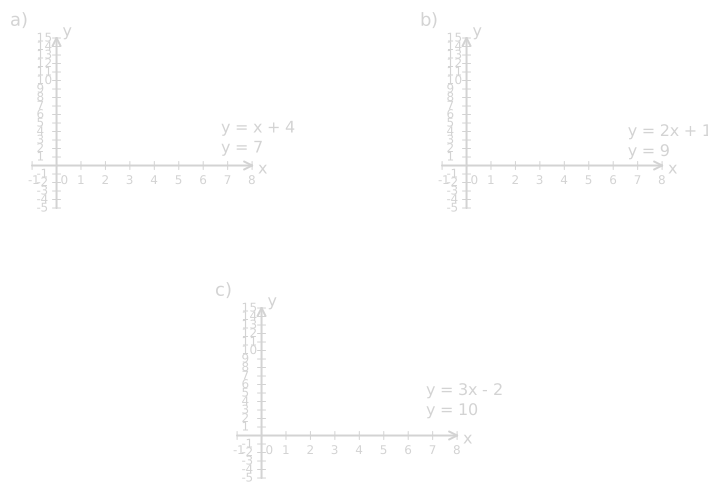
Exercise 6.
Solve each equation by graphing two lines.
a)
b)
c)
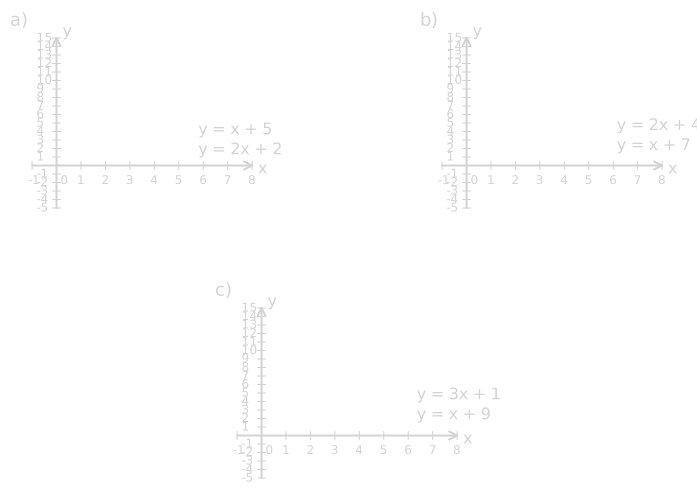
Exercise 7.
Solve each equation with pronumerals on both sides using the intersection point of two linear graphs.
a)
b)
c)
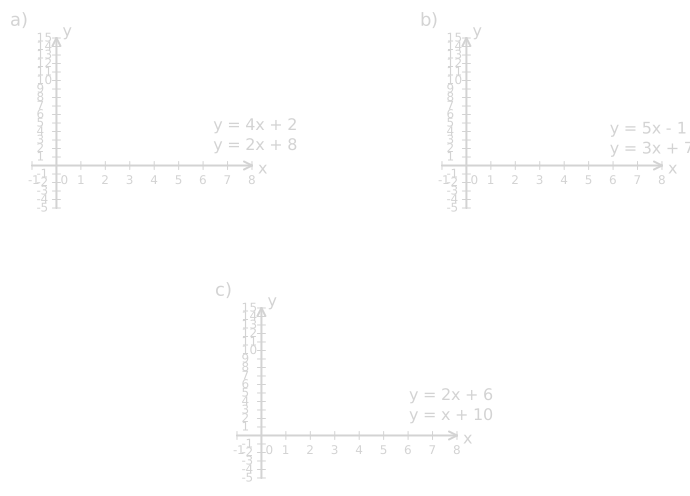
Exercise 8.
Solve each equation with pronumerals on both sides using the intersection point of two linear graphs.
a)
b)
c)
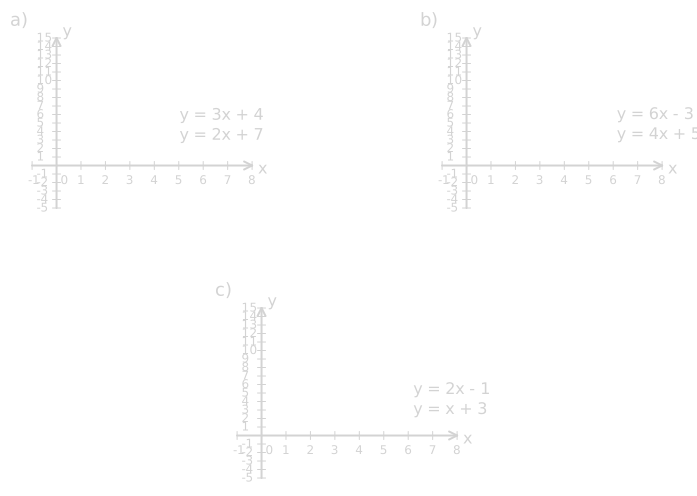
Reasoning
Exercise 9.
Explain why every point on a graph of
Exercise 10.
A student says that any point on either graph is a solution to both equations. Explain why this is incorrect.
Exercise 11.
Explain why the intersection point of two straight lines satisfies both equations.
Exercise 12.
A student solves
Exercise 13.
Explain why graphing
Problem-solving
Exercise 14.
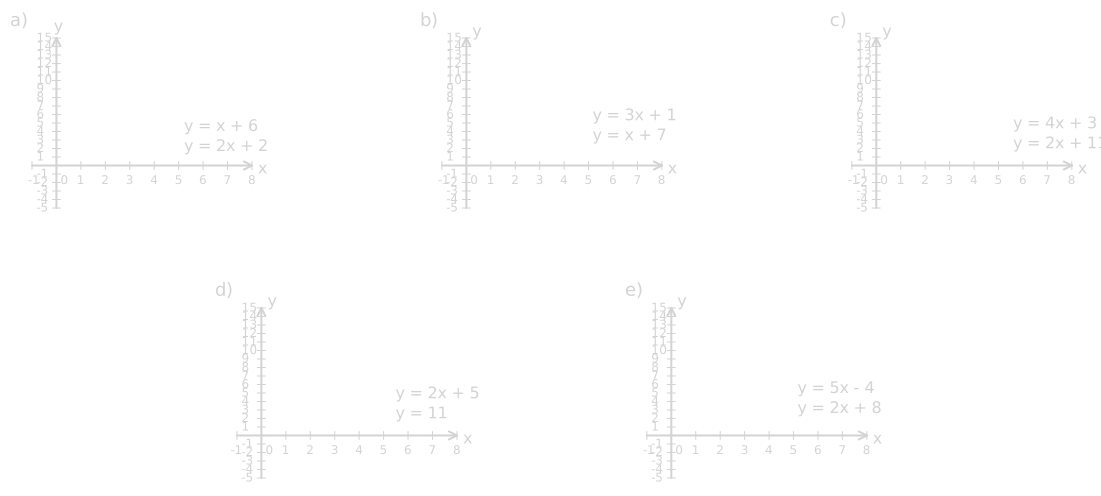
The cost of two phone plans is modelled by
Construct the graphs and Solve the number of call units for which the plans cost the same.
Exercise 15.
Two patterns are modelled by the rules
Construct the graphs and find the step number at which the two patterns have the same number of tiles.
Exercise 16.
A taxi fare model is given by
Construct the graphs and determine when the fares are equal.
Exercise 16.
A student wants to solve
State the two graphs they should Draw, then find the solution from the intersection point.
Exercise 17.
A builder compares two lengths modelled by
Construct the graphs and use the intersection point to solve
Potential Misunderstandings
- Thinking any plotted point near a graph must lie on the graph
- Forgetting that a point lies on a graph only if substitution makes the equation true
- Confusing the solution of an equation with the full coordinate pair of the intersection
- Thinking the intersection point gives only the
-value of the solution - Forgetting to rewrite an equation as two linear rules before graphing
- Assuming two graphs always intersect
- Thinking that any point on one graph must satisfy the other graph as well
- Reading the intersection point inaccurately from the graph
- Confusing solving
with graphing only one rule instead of two - Forgetting that the
-coordinate of the intersection gives the solution to the equation in