059. Finding Missing Angles in Diagrams
Learning Intentions
- combine facts involving parallel lines and other geometric properties to Solve missing angles in a diagram
Pre-requisite Summary
- Know that corresponding angles are equal when a transversal crosses parallel lines
- Know that alternate angles are equal when a transversal crosses parallel lines
- Know that co-interior angles on parallel lines sum to
- Know that vertically opposite angles are equal
- Know that angles on a straight line sum to
- Know that angles around a point sum to
- Know that angles in a triangle sum to
- Know that a right angle is
and angles in a quadrilateral sum to
Worked Examples
Worked Example 1
Two parallel lines are cut by a transversal. One angle is
a) State the angle fact involving parallel lines.
b) State the angle fact involving a straight line.
c) Find
Worked Example 2
Two parallel lines are cut by a transversal. An angle inside the parallel lines is
a) Find the angle adjacent to
b) Use the triangle angle sum if the other triangle angle is
c) Find
Worked Example 3
Two parallel lines are crossed by a transversal and one angle in the diagram is
a) Find the vertically opposite angle.
b) Find the corresponding angle.
c) Explain why both are equal to
Worked Example 4
A triangle sits between two parallel lines. One exterior angle is
a) Find the interior angle adjacent to
b) Transfer the angle Use the parallel-line fact.
c) Find the third angle of the triangle.
Worked Example 5
Two parallel lines are crossed by two transversals meeting at a point. At the point, one angle is
a) Use the corresponding-angle fact to Identify the
b) Use angles around a point.
c) Find
Worked Example 6
A quadrilateral has one pair of opposite sides parallel. Three interior angles are
a) Identify a co-interior or interior-angle relationship from the parallel sides.
b) Use any additional quadrilateral or straight-line facts needed.
c) Find
Problems
Problem 1
Two parallel lines are cut by a transversal. One angle is
a) State the angle fact involving parallel lines.
b) State the angle fact involving a straight line.
c) Find
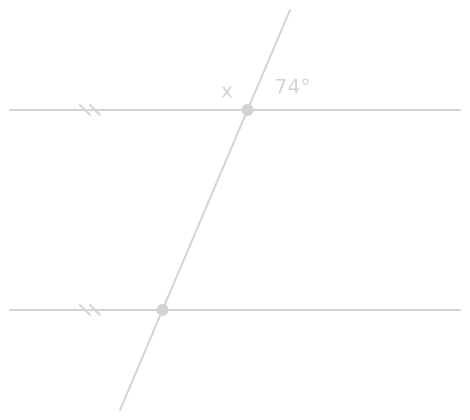
Problem 2
Two parallel lines are cut by a transversal. An angle inside the parallel lines is
a) Find the angle adjacent to
b) Use the triangle angle sum if the other triangle angle is
c) Find
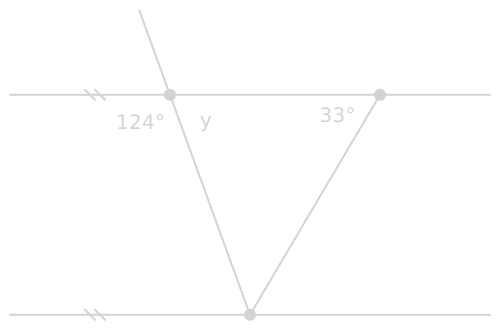
Problem 3
Two parallel lines are crossed by a transversal and one angle in the diagram is
a) Find the vertically opposite angle.
b) Find the corresponding angle.
c) Explain why both are equal to
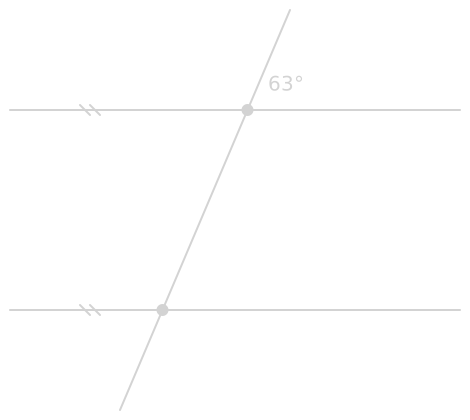
Problem 4
A triangle sits between two parallel lines. One exterior angle is
a) Find the interior angle adjacent to
b) Transfer the angle using the parallel-line fact.
c) Find the third angle of the triangle.
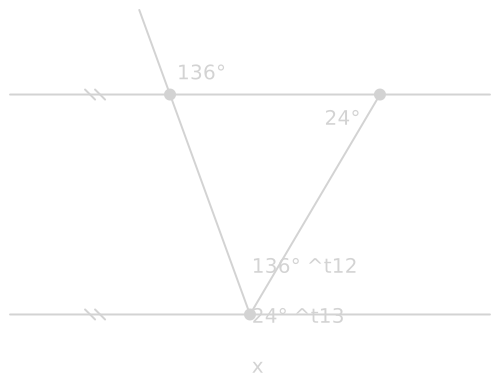
Problem 5
Two parallel lines are crossed by two transversals meeting at a point. At the point, one angle is
a) Use the corresponding-angle fact to identify the
b) Use angles around a point.
c) Find
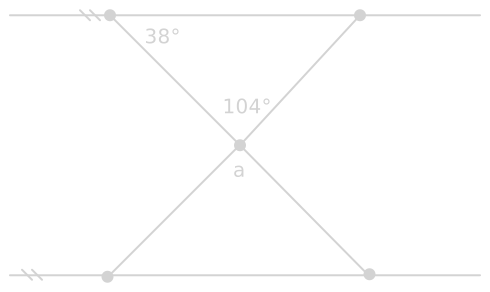
Problem 6
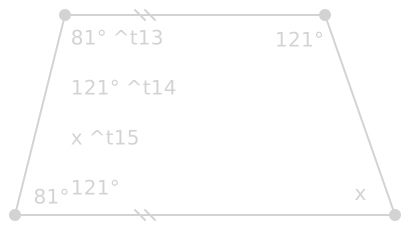
A quadrilateral has one pair of opposite sides parallel. Three interior angles are
a) Identify a cointerior or interior-angle relationship from the parallel sides.
b) Use any additional quadrilateral or straight-line facts needed.
c) Find
Exercises
Understanding and Fluency
Exercise 1.
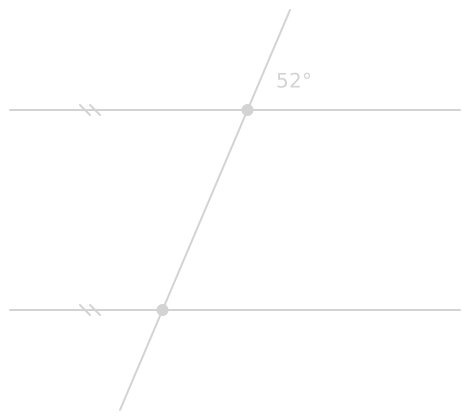
Two parallel lines are cut by a transversal. One angle is
a) a corresponding angle
b) an alternate angle
c) a cointerior angle
Exercise 2.
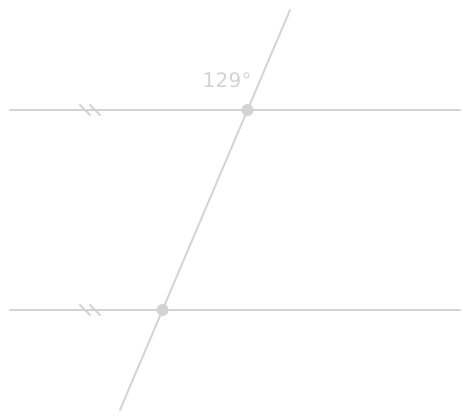
Two parallel lines are cut by a transversal. One angle is
a) a vertically opposite angle
b) an adjacent angle on a straight line
c) a corresponding angle
Exercise 3.
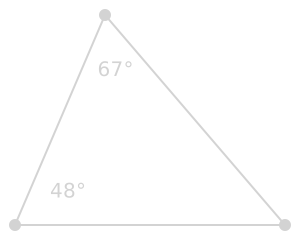
A triangle includes one angle of
a) the third angle
b) the supplement of the third angle
c) whether the third angle is acute, right or obtuse
Exercise 4.
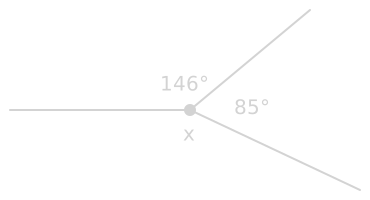
Angles around a point are
a)
b) the supplement of
c) whether
Exercise 5.
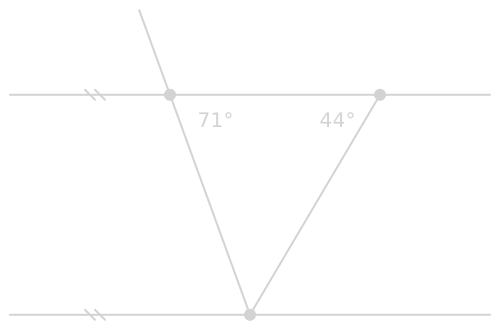
Two parallel lines are cut by a transversal. One angle is
a) the angle adjacent to
b) the corresponding or alternate angle inside the triangle
c) the third angle of the triangle
Exercise 6.
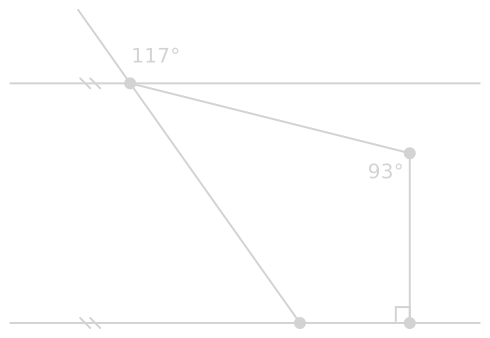
Two parallel lines are cut by a transversal. One exterior angle is
a) the adjacent interior angle
b) the transferred angle inside the quadrilateral
c) the final missing angle
Exercise 7.
In a diagram with parallel lines, one angle at an intersection is
a) the angle transferred from the parallel lines
b) the third angle of the triangle
c) the supplement of that third angle
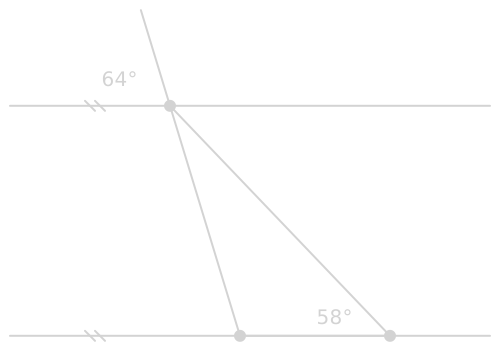
Exercise 8.
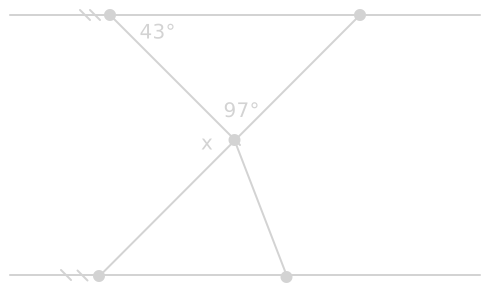
In a diagram with two parallel lines and two transversals crossing between them, one angle is
a) any transferred angle equal to
b) the remaining angle around the point
c)
Reasoning
Exercise 9.
Explain why a missing angle in a parallel-line diagram often cannot be found using only one angle fact.
Exercise 10.
A student uses corresponding angles correctly, but then adds them to
Exercise 11.
Explain why vertically opposite angles and alternate angles are different relationships, even if they can sometimes have the same size.
Exercise 12.
A student says that once two lines are parallel, every angle in the diagram must be equal. Explain why this is incorrect.
Problem-solving
Exercise 13.
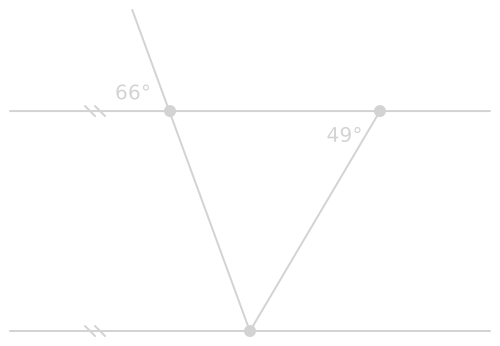
Two parallel roads are crossed by a side street. One angle at the top intersection is
Exercise 14.
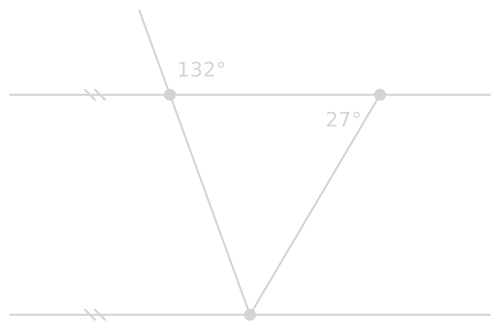
A roof truss diagram has two parallel beams and a diagonal brace. One exterior angle is
Exercise 15.
In a survey map, two fence lines are parallel and two paths cross between them. One transferred angle is
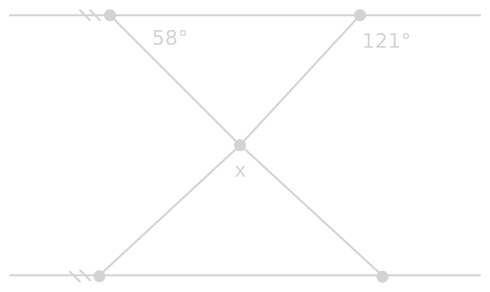
Exercise 16.
A quadrilateral inside two parallel lines has one right angle, one angle of
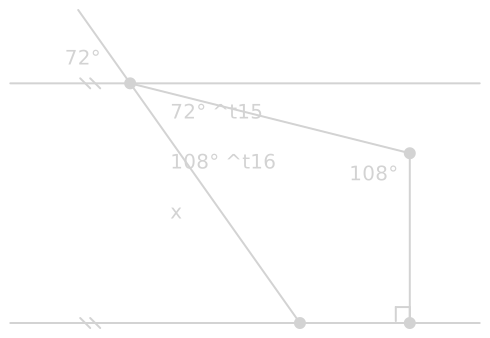
Exercise 17.
A bridge design shows two parallel beams cut by two supports forming a triangle. One support makes an angle of
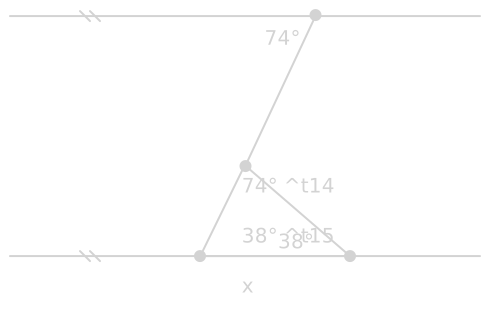
Exercise 18.
A window frame has parallel top and bottom edges. A diagonal bar creates an angle of
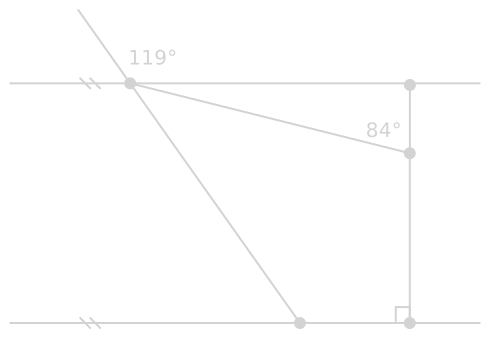
Potential Misunderstandings
- Students may try to use only one angle fact when the diagram requires several connected steps
- Students may confuse corresponding, alternate, co-interior and vertically opposite angles
- Students may use the correct angle relationship but Apply it to the wrong angle in the diagram
- Students may assume equal angles are adjacent when they are actually at different intersections
- Students may forget to use straight-line, triangle, quadrilateral or angles-around-a-point facts after transferring an angle with parallel lines
- Students may add angles that should be subtracted from
or - Students may not label intermediate angles, which can make multi-step reasoning harder to follow
- Students may think diagrams are drawn to scale and guess an answer instead of using angle facts