058. Angles with Parallel Lines and a Transversal
Learning Intentions
- To know the meaning of the terms transversal, corresponding, alternate, co-interior and parallel
- Identify angles that are in a given relation to another angle (for example, identifying an angle co-interior to a given angle)
- Solve the size of angles when a transversal crosses parallel lines
- Determine whether two lines are parallel Use angles involving a transversal
Pre-requisite Summary
- Understand that lines can intersect and that some pairs of lines are parallel
- Know that parallel lines stay the same distance apart and never meet
- Be able to identify adjacent, supplementary and vertically opposite angles
- Know that angles on a straight line add to
- Know that angles around a point add to
- Be able to read labelled angle diagrams carefully
- Understand that a transversal is a line that crosses two other lines
- Be able to compare angle sizes and justify why two angles are equal or supplementary
Worked Examples
Worked Example 1
a) Define the terms transversal, corresponding, alternate, cointerior and parallel.
b) In a diagram of two parallel lines cut by a transversal, Describe where corresponding angles are found.
c) Describe where alternate and cointerior angles are found.
Worked Example 2
In a labelled diagram of two parallel lines cut by a transversal, angle
a) Identify one angle corresponding to angle
b) Identify one angle alternate to angle
c) Identify one angle cointerior to angle
Worked Example 3
Two parallel lines are crossed by a transversal. One angle is
a) Find an angle corresponding to it.
b) Find an angle alternate to it.
c) Find a cointerior angle related to it.
Worked Example 4
Two parallel lines are crossed by a transversal. One angle is
a) Find all angles equal to
b) Find all angles supplementary to
c) Explain the angle facts used.
Worked Example 5
A transversal crosses two lines. A pair of corresponding angles are both
a) State the relationship between the two lines.
b) Explain why this angle fact shows the lines are parallel.
Worked Example 6
A transversal crosses two lines. One pair of cointerior angles are
a) Find their sum.
b) State the relationship between the two lines.
c) Explain why this angle fact shows the lines are parallel.
Problems
Problem 1
a) Define the terms transversal, corresponding, alternate, cointerior and parallel.
b) In a diagram of two parallel lines cut by a transversal, describe where corresponding angles are found.
c) Describe where alternate and cointerior angles are found.
Problem 2
In a labelled diagram of two parallel lines cut by a transversal, angle
a) Identify one angle corresponding to angle
b) Identify one angle alternate to angle
c) Identify one angle cointerior to angle
Problem 3
Two parallel lines are crossed by a transversal. One angle is
a) Find an angle corresponding to it.
b) Find an angle alternate to it.
c) Find a cointerior angle related to it.
Problem 4
Two parallel lines are crossed by a transversal. One angle is
a) Find all angles equal to
b) Find all angles supplementary to
c) Explain the angle facts used.
Problem 5
A transversal crosses two lines. A pair of corresponding angles are both
a) State the relationship between the two lines.
b) Explain why this angle fact shows the lines are parallel.
Problem 6
A transversal crosses two lines. One pair of cointerior angles are
a) Find their sum.
b) State the relationship between the two lines.
c) Explain why this angle fact shows the lines are parallel.
Exercises
Understanding and Fluency
Exercise 1.
State the meaning of each term:
a) transversal
b) parallel
c) corresponding angles
Exercise 2.
State the meaning of each term:
a) alternate angles
b) cointerior angles
c) parallel lines
Exercise 3.
In a diagram of two parallel lines cut by a transversal, state whether each pair is equal or supplementary:
a) corresponding angles
b) alternate angles
c) cointerior angles
Exercise 4.
Identify the requested angle relationship in a labelled diagram:
a) an angle corresponding to
b) an angle alternate to
c) an angle cointerior to
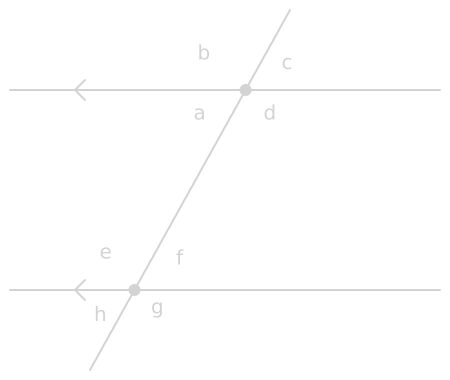
Exercise 5.
Two parallel lines are cut by a transversal and one angle is
a) one corresponding angle
b) one alternate angle
c) one cointerior angle
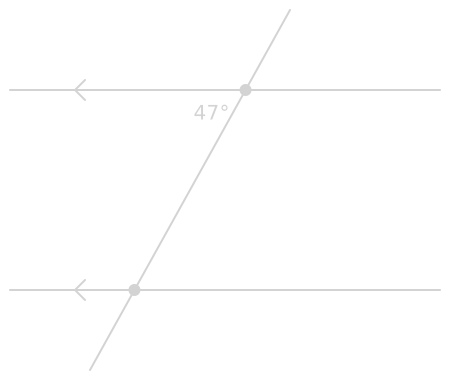
Exercise 6.
Two parallel lines are cut by a transversal and one angle is
a) one corresponding angle
b) one alternate angle
c) one cointerior angle
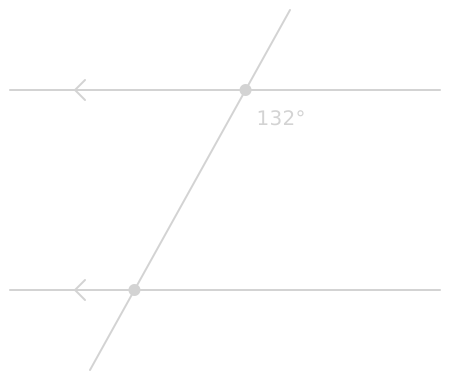
Exercise 7.
Find the missing angle when a transversal crosses parallel lines:
a) one angle is
b) one angle is
c) one angle is
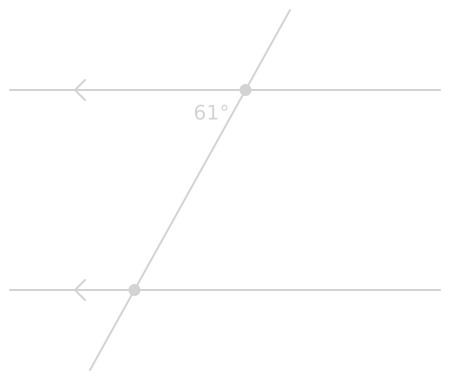
Exercise 8.
Find the missing angle when a transversal crosses parallel lines:
a) one angle is
b) one angle is
c) one angle is
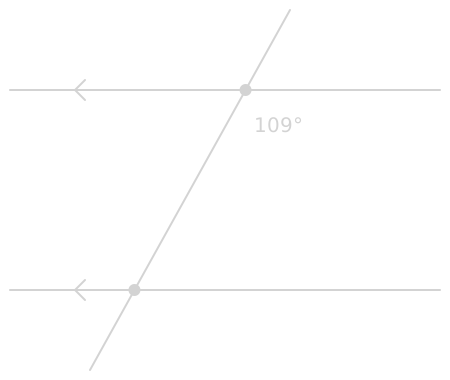
Exercise 9.
Decide whether the lines are parallel:
a) a pair of corresponding angles are equal
b) a pair of alternate angles are equal
c) a pair of cointerior angles add to
Exercise 10.
Mixed practice:
a) If alternate angles are
b) If cointerior angles are
c) If corresponding angles are
Reasoning
Exercise 11.
Explain why corresponding angles are equal when a transversal crosses parallel lines.
Exercise 12.
A student says cointerior angles are always equal. Explain the mistake.
Exercise 13.
Explain why equal alternate angles can be used to prove that two lines are parallel.
Exercise 14.
A student says that if one angle is
Exercise 15.
Explain why cointerior angles on parallel lines add to
Exercise 16.
A student claims two lines are parallel because one corresponding angle is
Problem-solving
Exercise 17.
Two railway tracks are marked as parallel and a service road crosses them as a transversal. One interior angle is
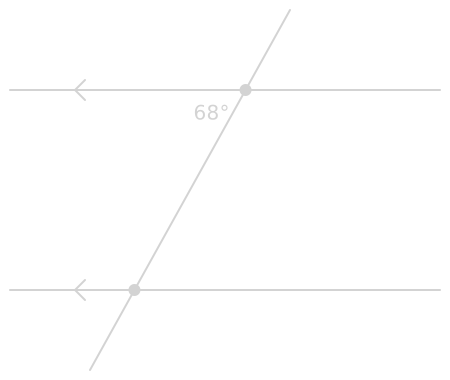
Exercise 18.
In a street diagram, two roads are claimed to be parallel. A crossing road creates a pair of corresponding angles of
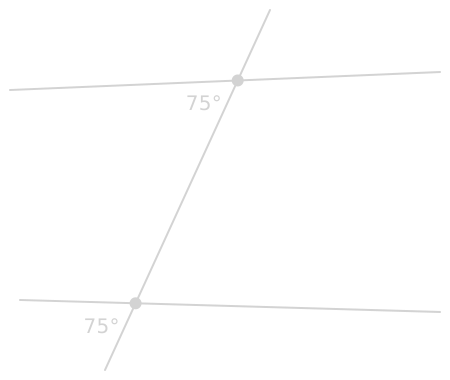
Exercise 19.
A carpenter draws two timber edges and a cross brace. The brace forms cointerior angles of
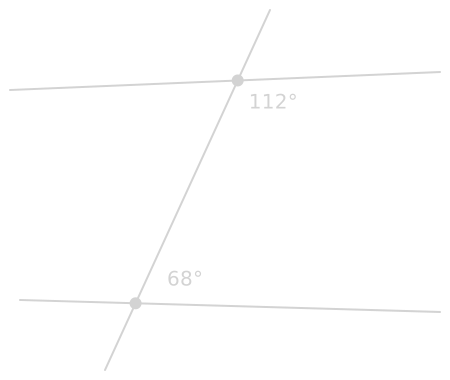
Exercise 20.
In a geometry diagram, one angle made by a transversal is
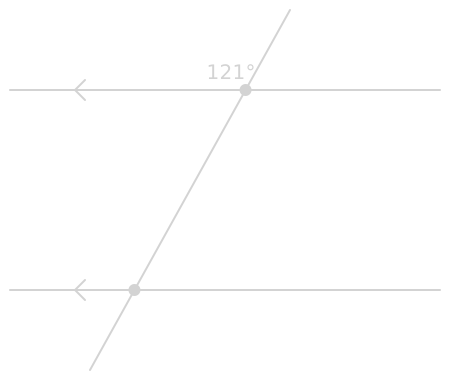
Exercise 21.
An engineer checks two beams cut by a support bar. A pair of alternate angles are
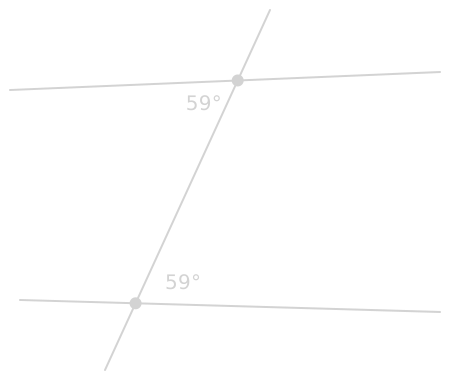
Exercise 22.
Two lines are cut by a transversal. A pair of corresponding angles are
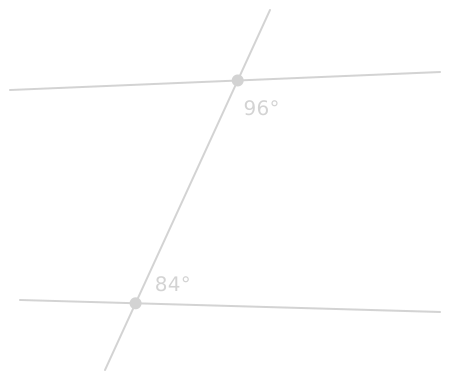
Potential Misunderstandings
- Students may confuse corresponding, alternate and cointerior angles
- Students may think cointerior angles are equal instead of supplementary
- Students may not Recognise which line is the transversal in a diagram
- Students may assume any two equal angles imply lines are parallel, without checking the angle relationship
- Students may confuse vertically opposite angles with alternate angles
- Students may forget that corresponding and alternate angles are equal only when the lines are parallel
- Students may Use the wrong angle sum when working with cointerior angles
- Students may identify the correct angle relationship but Apply the wrong rule to find the angle size
- Students may think lines are parallel just because they look parallel in a Draw, rather than using angle facts