175e. Gradient of a Straight Line
Learning Intentions
- Recognise that the gradient is a number measuring the slope of a line
- Recognise that the gradient can be positive, negative, zero or undefined
- Solve the gradient of a straight line
Pre-requisite Summary
- A straight line can rise, fall or stay level as you move from left to right
- Coordinates are written as ordered pairs
- The horizontal change between two points is the change in
- The vertical change between two points is the change in
- Division can be used to compare vertical change with horizontal change
- A horizontal line has equation
- A vertical line has equation
Worked Examples
Worked Example 1
State whether the gradient of each line is positive, negative, zero or undefined.
a) a line rising from left to right
b) a line falling from left to right
c) a horizontal line
d) a vertical line
Worked Example 2
Find the gradient of the line through the points
Worked Example 3
Find the gradient of the line through the points
Worked Example 4
Find the gradient of the line through the points
Worked Example 5
Explain why the line through the points
Worked Example 6
A student says the gradient of the line through
Test the claim and Determine the correct gradient.
Problems
Problem 1
State whether the gradient of each line is positive, negative, zero or undefined.
a) a line rising from left to right
b) a horizontal line
c) a vertical line
Problem 2
Find the gradient of the line through the points
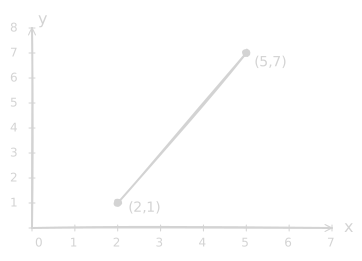
Problem 3
Find the gradient of the line through the points
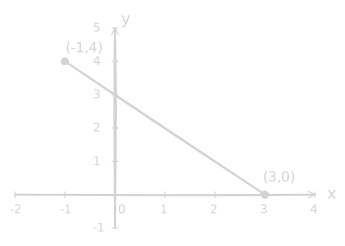
Problem 4
Find the gradient of the line through the points
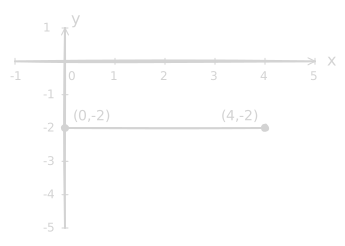
Problem 5
Explain why the line through the points
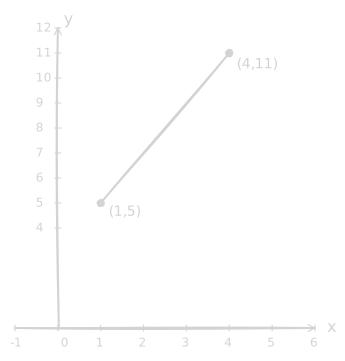
Problem 6
A student says the gradient of the line through
Test the claim and determine the correct gradient.
Exercises
Understanding and Fluency
Exercise 1
State whether each line has positive, negative, zero or undefined gradient.
a) a line that rises from left to right
b) a line that falls from left to right
c) a horizontal line
d) a vertical line
Exercise 2
State whether each equation describes a line with zero or undefined gradient.
a)
b)
c)
d)
Exercise 3
Find the gradient of each line through the given points.
a)
b)
c)
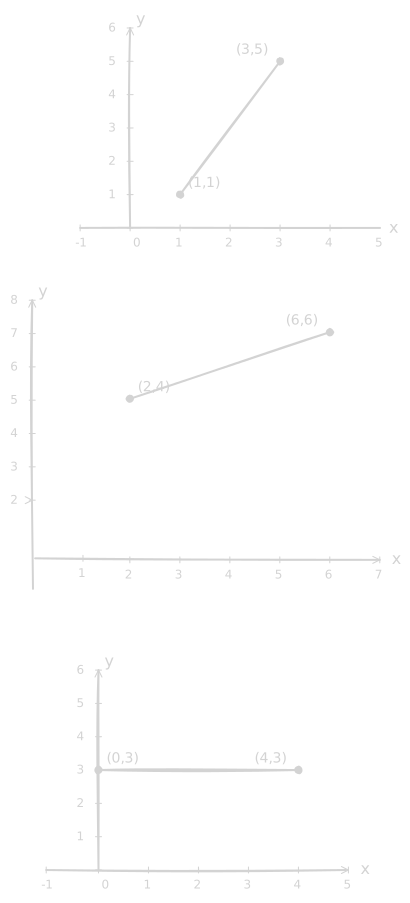
Exercise 4
Find the gradient of each line through the given points.
a)
b)
c)
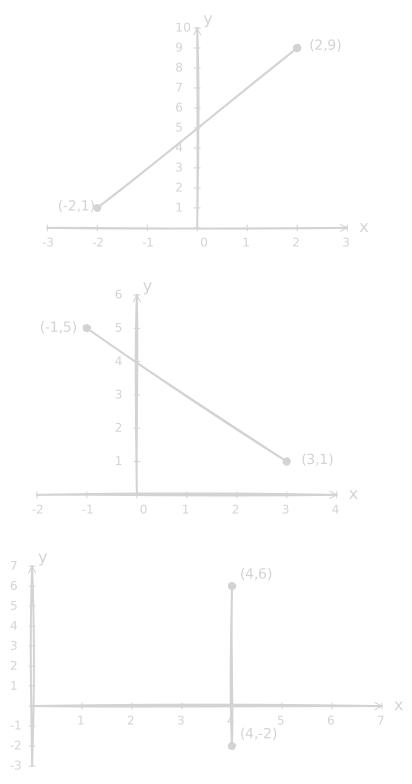
Exercise 5
Find the gradient of each line through the given points.
a)
b)
c)
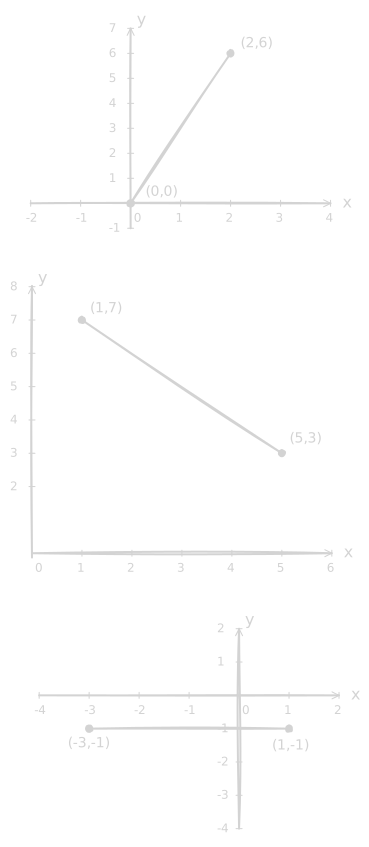
Exercise 6
Find the gradient of each line through the given points.
a)
b)
c)
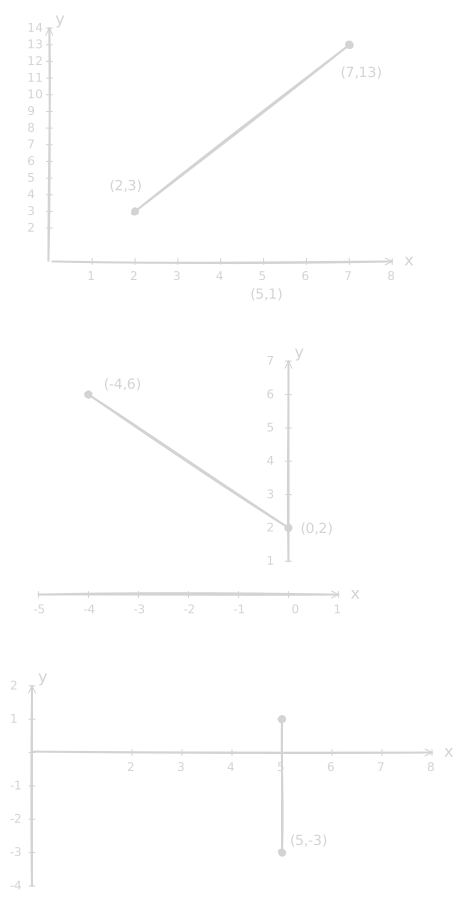
Exercise 7
Match each description to a possible gradient.
a) rising steeply from left to right
b) falling gently from left to right
c) horizontal line
d) vertical line
Possible gradients:
Exercise 8
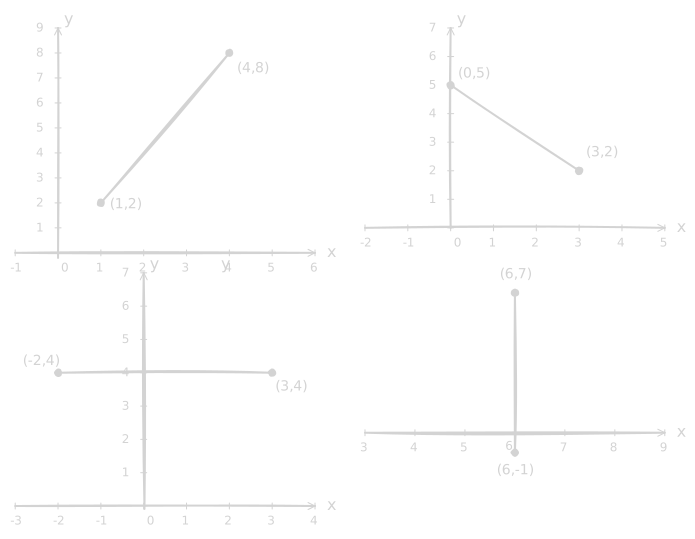
For each pair of points, decide whether the line has positive, negative, zero or undefined gradient, then find the gradient if possible.
a)
b)
c)
d)
Reasoning
Exercise 9
Explain why a line with positive gradient rises from left to right.
Exercise 10
Explain why a horizontal line has gradient
Exercise 11
Explain why a vertical line has undefined gradient.
Exercise 12
A student says that every sloping line has a positive gradient. Explain why this is incorrect.
Exercise 13
A student calculates the gradient of the line through
Exercise 14
Explain why the gradient compares vertical change with horizontal change.
Problem-solving
Exercise 15
A road rises from height
Find the gradient.
Exercise 16
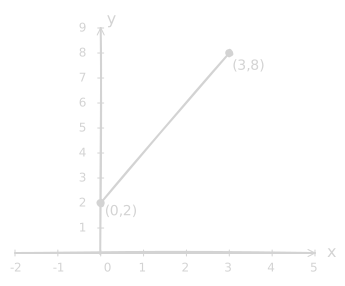
A line on a Draw passes through the points
Find the gradient and state whether it is positive or negative.
Exercise 17
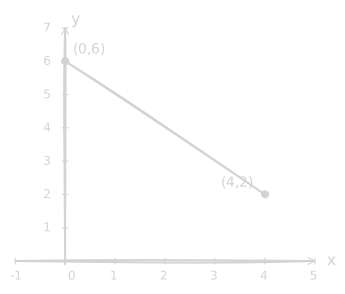
A line passes through the points
Find the gradient.
Exercise 18
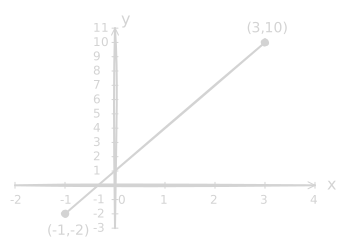
A builder draws a level beam represented by the points
Find the gradient and explain what it means about the beam.
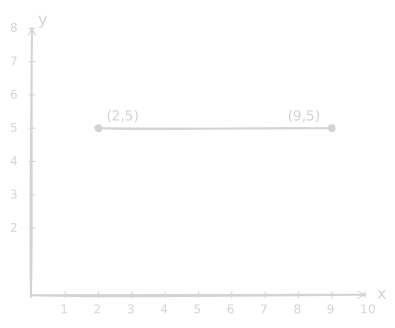
Exercise 19
A student says that the line through
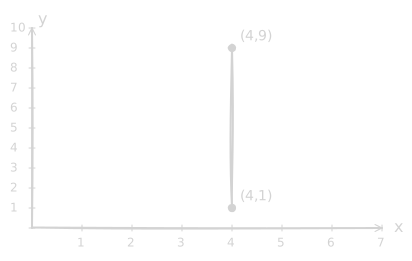
Exercise 20
Two points on a straight line are
Find the gradient and Describe the slope of the line.
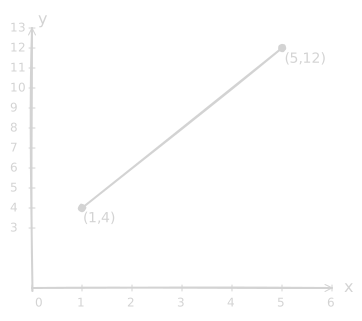
Potential Misunderstandings
- Thinking gradient is the same as the
-intercept - Confusing positive gradient with lines that fall from left to right
- Thinking every straight line has a defined gradient
- Forgetting that horizontal lines have gradient
- Forgetting that vertical lines have undefined gradient
- Reversing the order of the changes when calculating gradient
- Use change in
over change in instead of change in over change in - Believing a larger gradient always means a higher line rather than a steeper slope
- Thinking zero gradient and undefined gradient mean the same thing