165. Two-Step Probability Experiments
Learning Intentions
- Understand that a table can be used to list the sample space of a two-step experiment
- Calculate the probability of events in two-step experiments
- Calculate the probability of events in two-step experiments
Pre-requisite Summary
- A probability is a number between
and - An experiment is a chance process, and a trial is one performance of that process
- An outcome is one possible result, and an event is a set of outcomes
- The sample space is the set of all possible outcomes
- Fractions can be used to represent probabilities
- A table can organise outcomes clearly when an experiment has two steps
- To Solve a probability, compare the number of favourable outcomes with the total number of outcomes
Worked Examples
Worked Example 1
A coin is tossed and then a fair six-sided die is rolled.
Use a table to list the sample space.
Worked Example 2
A coin is tossed and then a fair six-sided die is rolled.
Find the probability of getting heads and a
Worked Example 3
A coin is tossed and then a fair six-sided die is rolled.
Find the probability of getting a tail and an even number.
Worked Example 4
A spinner with equal sections labelled
Use a table to list the sample space and find the probability of getting
Worked Example 5
A card numbered
Find the probability of getting an odd number and tails.
Worked Example 6
A fair die is rolled twice.
Use a table to list the sample space and find the probability of getting a total of
Problems
Problem 1
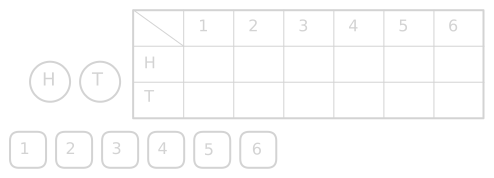
A coin is tossed and then a fair six-sided die is rolled.
Use a table to list the sample space.
Problem 2
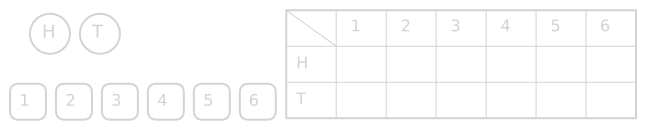
A coin is tossed and then a fair six-sided die is rolled.
Find the probability of getting tails and a
Problem 3
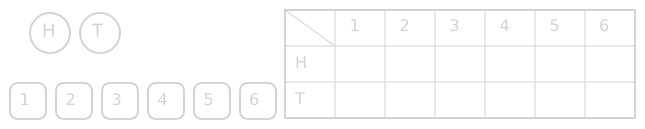
A coin is tossed and then a fair six-sided die is rolled.
Find the probability of getting heads and an odd number.
Problem 4
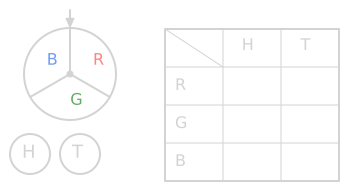
A spinner with equal sections labelled
Use a table to list the sample space and find the probability of getting
Problem 5
A card numbered
Find the probability of getting an even number and heads.
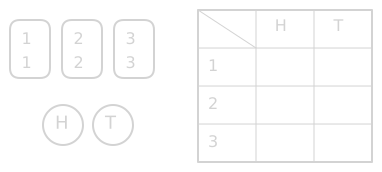
Problem 6
A fair die is rolled twice.
Use a table to list the sample space and find the probability of getting a total of

Exercises
Understanding and Fluency
Exercise 1.
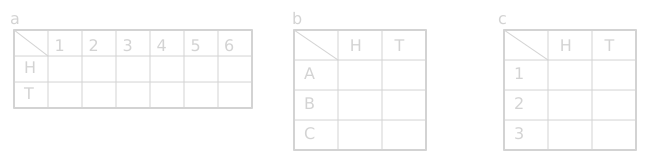
List the sample space for each two-step experiment.
a) toss a coin, then roll a fair six-sided die
b) spin a spinner labelled
c) Choose a card numbered
Exercise 2.
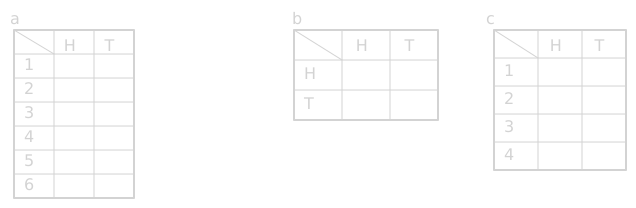
Use a table to list the sample space for each experiment.
a) roll a fair die, then toss a coin
b) toss a coin twice
c) choose a card numbered
Exercise 3.
A coin is tossed and then a fair six-sided die is rolled. Find each probability.
a)
b)
c)
Exercise 4.
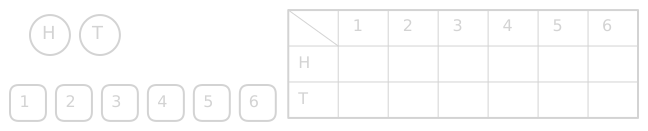
A coin is tossed and then a fair six-sided die is rolled. Find each probability.
a)
b)
c)
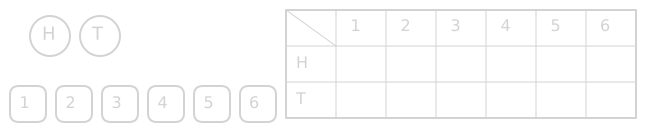
Exercise 5.
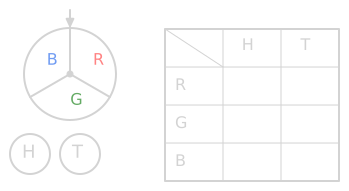
A spinner with equal sections labelled
a)
b)
c)
Exercise 6.
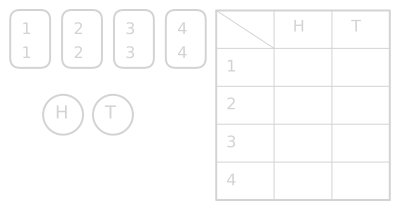
A card numbered
a)
b)
c)
Exercise 7.
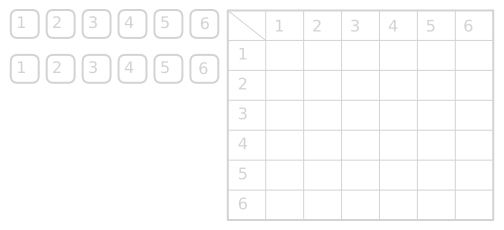
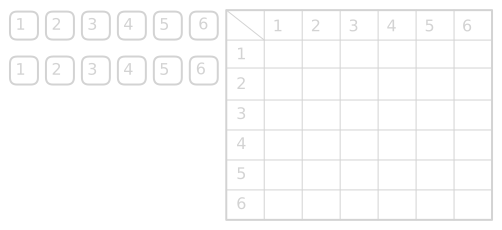
A fair die is rolled twice. Find each probability.
a) a total of
b) a total of
c) doubles
Exercise 8.
A fair die is rolled twice. Find each probability.
a) a total greater than
b) the first roll is
c) the two numbers have an odd total
Reasoning
Exercise 9.
Explain why a table is useful for listing the sample space of a two-step experiment.
Exercise 10.
A student says that tossing a coin and rolling a die gives
Exercise 11.
Explain why the probability of getting heads and a
Exercise 12.
A student says that when a die is rolled twice, the outcomes
Exercise 13.
Explain why the total number of outcomes in a two-step experiment is often found by multiplying.
Problem-solving
Exercise 14.
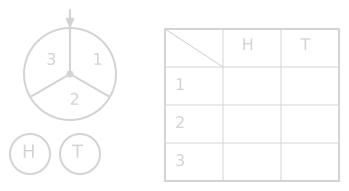
A game uses a spinner with equal sections labelled
Use a table to list the sample space, then find the probability of getting an even number and tails.
Exercise 15.
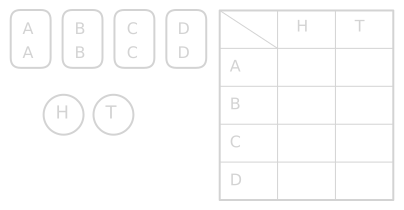
A bag contains cards labelled
Find the probability of getting a vowel and heads.
Exercise 16.
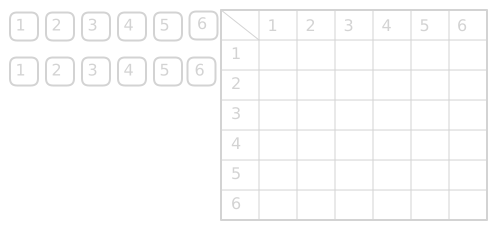
A fair die is rolled twice.
Find the probability of getting a total of
Exercise 17
A fair coin is tossed twice.
Find the probability of getting exactly one head.
Exercise 18.
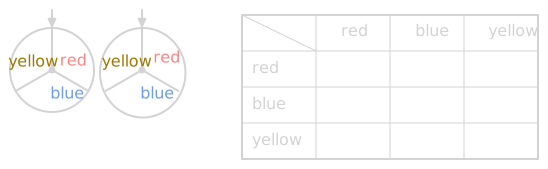
A spinner has equal sections labelled red, blue and yellow. It is spun twice.
Find the probability of getting the same colour both times.
Potential Misunderstandings
- Thinking the total number of outcomes in a two-step experiment is found by adding instead of multiplying
- Forgetting that order matters in many two-step experiments, such as rolling a die twice
- Missing outcomes when listing a sample space without Use a table
- Counting some outcomes twice and others not at all
- Confusing a single outcome with an event made of several outcomes
- Using the number of favourable outcomes as the denominator instead of the total number of outcomes
- Thinking
and are always the same outcome - Forgetting that a table should include every possible result from the first step paired with every possible result from the second step
- Assuming all events in a two-step experiment have the same number of favourable outcomes