122. Area of Special Quadrilaterals
Learning Intentions
- To understand that the formulas for the area of special quadrilaterals can be developed from the formulas for the area of rectangles and triangles
- Solve the area of rhombuses, kites and trapeziums
Pre-requisite Summary
- Know that area measures the amount of surface inside a two-dimensional shape
- Know that area is measured in square units such as
, and - Be able to find the area of rectangles Use length
width - Be able to find the area of triangles using
- Understand that some quadrilaterals can be split into triangles or rearranged into rectangles
- Know the names and basic properties of rhombuses, kites and trapeziums
- Understand that the perpendicular height is used in area formulas, not a sloping side
Worked Examples
Worked Example 1
A trapezium can be split and rearranged to connect its area formula to rectangles and triangles.
a) A trapezium has parallel sides
b) A trapezium has parallel sides
Worked Example 2
A rhombus can be split by its diagonals into triangles.
a) A rhombus has diagonals
b) A rhombus has diagonals
Worked Example 3
A kite can be split by its diagonals into triangles.
a) A kite has diagonals
b) A kite has diagonals
Worked Example 4
Use the area formula for a trapezium:
a) parallel sides
b) parallel sides
Worked Example 5
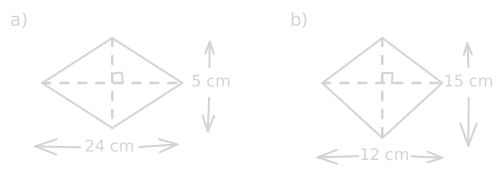
Use the area formula for a rhombus or kite:
a) a rhombus with diagonals
b) a kite with diagonals
Problems
Problem 1
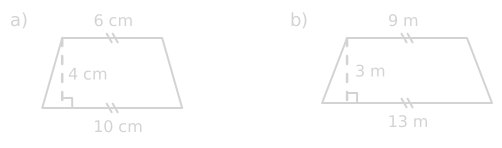
A trapezium can be split and rearranged to connect its area formula to rectangles and triangles.
a) A trapezium has parallel sides
b) A trapezium has parallel sides
Problem 2
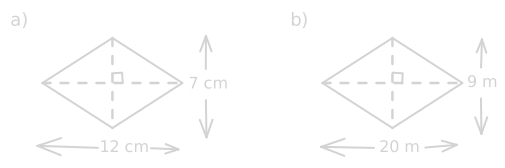
A rhombus can be split by its diagonals into triangles.
a) A rhombus has diagonals
b) A rhombus has diagonals
Problem 3
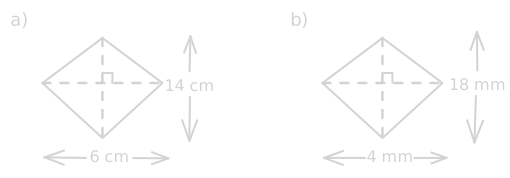
A kite can be split by its diagonals into triangles.
a) A kite has diagonals
b) A kite has diagonals
Problem 4
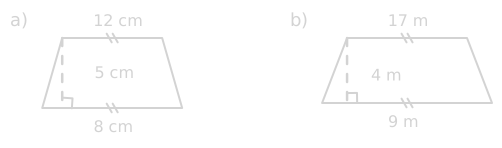
Use the area formula for a trapezium:
a) parallel sides
b) parallel sides
Problem 5
Use the area formula for a rhombus or kite:
a) a rhombus with diagonals
b) a kite with diagonals
Exercises
Understanding and Fluency
Exercise 1.
Complete each statement:
a) The area of a trapezium depends on the two ______ sides and the ______
b) The area of a rhombus can be found using its ______
c) The area of a kite can be found using its ______
Exercise 2.
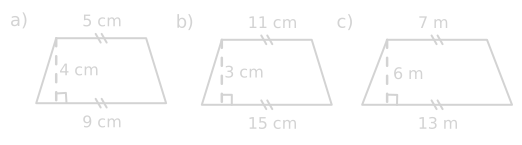
Find the area of each trapezium:
a) parallel sides
b) parallel sides
c) parallel sides
Exercise 3.
Find the area of each trapezium:
a) parallel sides
b) parallel sides
c) parallel sides

Exercise 4.
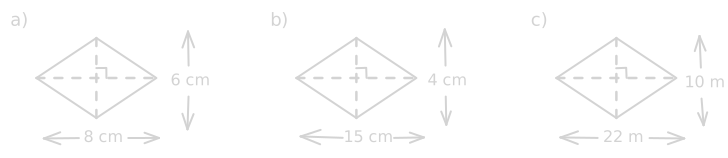
Find the area of each rhombus:
a) diagonals
b) diagonals
c) diagonals
Exercise 5.
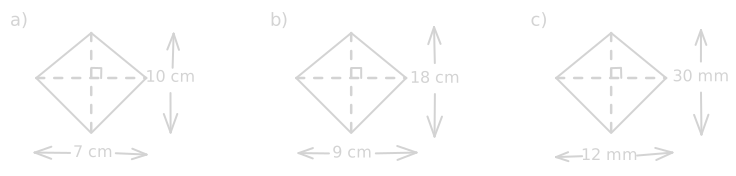
Find the area of each kite:
a) diagonals
b) diagonals
c) diagonals
Exercise 6.
Decide which formula is most suitable, then find the area:
a) a rhombus with diagonals
b) a trapezium with parallel sides
c) a kite with diagonals
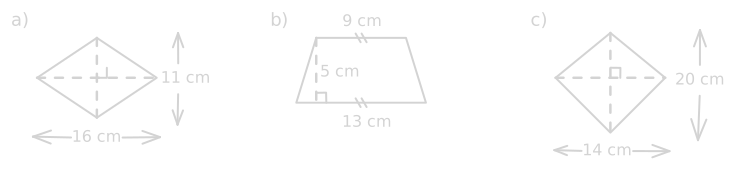
Exercise 7.
Find the missing measurement:
a) A rhombus has area
b) A kite has area
c) A trapezium has area
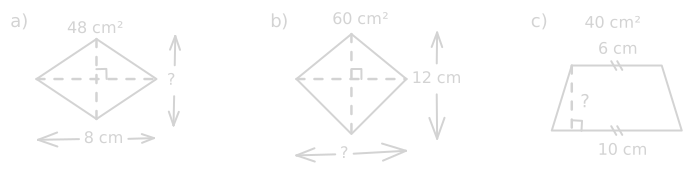
Exercise 8.
A shape is split into simpler shapes to justify its formula.
a) Explain how a trapezium formula can come from rectangles and triangles.
b) Explain how a rhombus formula can come from triangles.
c) Explain how a kite formula can come from triangles.
Reasoning
Exercise 9.
Explain why the area formula for a trapezium uses the average of the two parallel sides.
Exercise 10.
A student says the area of a rhombus is found by multiplying its side lengths. Explain the mistake.
Exercise 11.
Noah says a kite and a rhombus must use different area formulas because they are different shapes. Is he correct? Explain.
Exercise 12.
Explain why the diagonals are used in the area formulas for rhombuses and kites.
Exercise 13.
A student uses a sloping side instead of the perpendicular height in the area formula for a trapezium. Describe the error.
Problem-solving
Exercise 14.
A trapezium has parallel sides
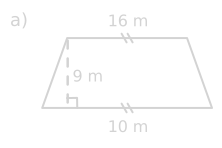
Exercise 15.
A rhombus-shaped garden has diagonals
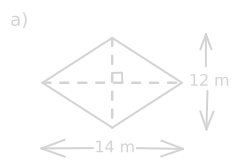
Exercise 16.
A kite-shaped window has diagonals
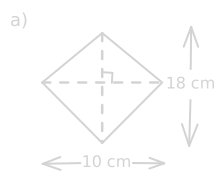
Exercise 17.
A trapezium has area
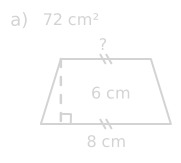
Exercise 18.
A rhombus has area
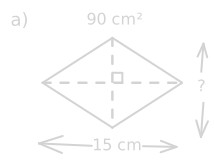
Exercise 19.
A composite design is made from a trapezium of area
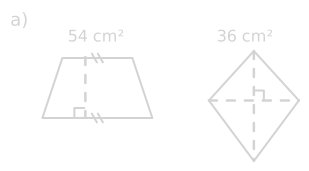
Potential Misunderstandings
- Students may confuse area formulas with perimeter formulas
- Students may use side lengths instead of diagonals for a rhombus or kite
- Students may forget to divide by
when using the diagonals of a rhombus or kite - Students may forget that only the parallel sides are used in the trapezium formula
- Students may use a sloping side instead of the perpendicular height in a trapezium
- Students may think the formulas for rhombuses, kites and trapeziums are unrelated to rectangles and triangles
- Students may average the wrong lengths in a trapezium
- Students may omit square units in their final answers