121r. Review Area of Shapes and Composite Figures
Learning Intentions
- To understand what the area of a two-dimensional shape is
- convert between different metric units of area, including hectares
- Solve the area of squares, rectangles, parallelograms and triangles
- To understand that the area of composite shapes can be found by adding or subtracting the area of more basic shapes
Pre-requisite Summary
- Know that two-dimensional shapes are flat shapes with length and width
- Understand that area measures the amount of surface inside a shape
- Know that area is measured in square units such as
, , and - Know basic metric length conversions such as
and - Be able to multiply whole numbers and decimals
- Understand that a square has all sides equal and a rectangle has opposite sides equal
- Know that a triangle can be seen as half of a matching parallelogram or rectangle
- Be able to split a complex shape into simpler shapes
Worked Examples
Worked Example 1
State what area means and Identify suitable units:
a) the space inside a book cover
b) the space inside a classroom floor
c) the space inside a farm
Worked Example 2
Convert between metric units of area:
a)
b)
c)
Worked Example 3
Find the area:
a) a square with side length
b) a rectangle with length
c) a parallelogram with base
Worked Example 4
Find the area of each triangle:
a) base
b) base
Worked Example 5
Find the area of a composite shape by addition:
a) a shape made from a
b) a shape made from two rectangles of areas
Worked Example 6
Find the area of a composite shape by subtraction:
a) a
b) a square of side
Problems
Problem 1
State what area means and identify suitable units:
a) the space inside a desktop
b) the space inside a sports field
c) the space inside a state park
Problem 2
Convert between metric units of area:
a)
b)
c)
Problem 3
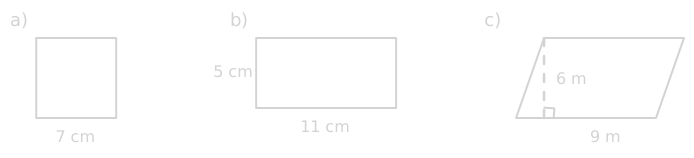
Find the area:
a) a square with side length
b) a rectangle with length
c) a parallelogram with base
Problem 4
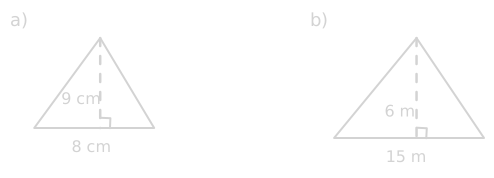
Find the area of each triangle:
a) base
b) base
Problem 5
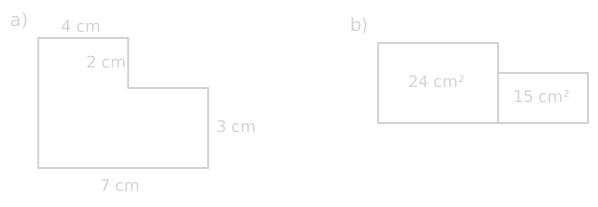
Find the area of a composite shape by addition:
a) a shape made from a
b) a shape made from two rectangles of areas
Problem 6
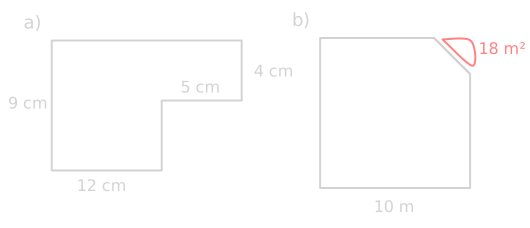
Find the area of a composite shape by subtraction:
a) a
b) a square of side
Exercises
Understanding and Fluency
Exercise 1.
Complete each statement:
a) Area is the amount of what inside a shape
b) Area is measured in what units
c) The area of a rectangle is found by multiplying what by ______
Exercise 2.
Convert between metric units of area:
a)
b)
c)
d)
Exercise 3.
Convert between metric units of area:
a)
b)
c)
d)
Exercise 4.
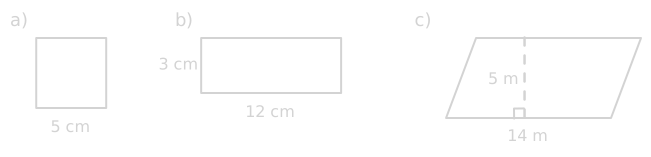
Find the area of each shape:
a) a square with side
b) a rectangle with length
c) a parallelogram with base
Exercise 5.
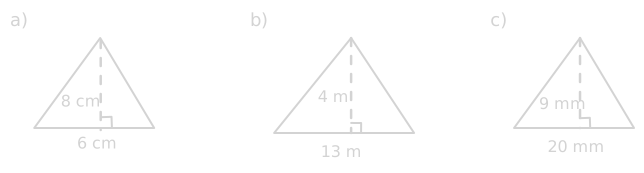
Find the area of each triangle:
a) base
b) base
c) base
Exercise 6.
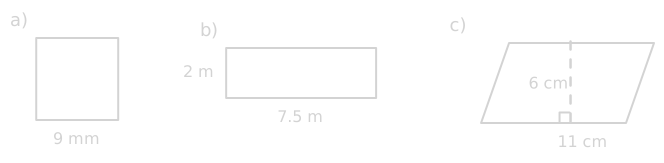
Find the area of each shape:
a) a square with side
b) a rectangle with length
c) a parallelogram with base
Exercise 7.
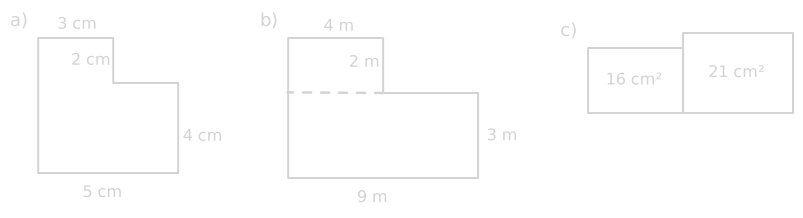
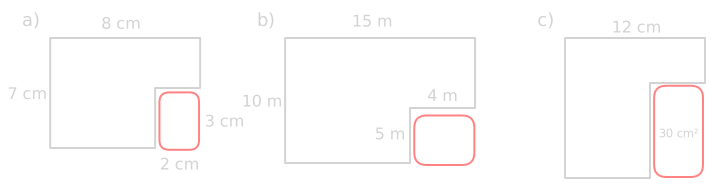
Find the area of each composite shape by addition:
a) a
b) a
c) two rectangles of areas
Exercise 8.
Find the area of each composite shape by subtraction:
a) an
b) a
c) a square of side
Reasoning
Exercise 9.
Explain why area is measured in square units instead of units such as cm or m.
Exercise 10.
A student says that the area of a rectangle with length
Exercise 11.
Noah says that the area of a parallelogram is found by multiplying the lengths of its sloping sides. Is he correct? Explain.
Exercise 12.
Explain why the area of a triangle is half the area of a rectangle or parallelogram with the same base and height.
Exercise 13.
A student finds the area of a composite shape by adding all the outside side lengths. Describe the error.
Problem-solving
Exercise 14.
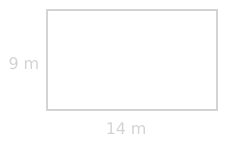
A rectangular garden is
Exercise 15.
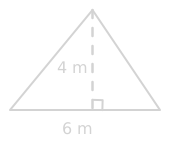
A triangular sail has base
Exercise 16.
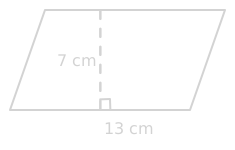
A parallelogram has base
Exercise 17.
A school field has area
Exercise 18.
A floor plan is made from a
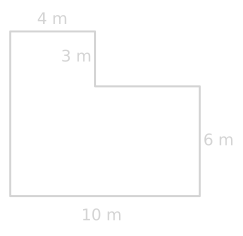
Exercise 19.
A
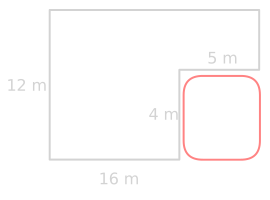
Potential Misunderstandings
- Students may confuse area with perimeter
- Students may Use one-dimensional units for area instead of square units
- Students may confuse length conversions with area conversions
- Students may think
instead of - Students may forget that
- Students may use the sloping side of a parallelogram instead of the perpendicular height
- Students may forget to divide by
when finding the area of a triangle - Students may add side lengths instead of multiplying dimensions when finding area
- Students may not split a composite shape into sensible basic shapes
- Students may add areas when subtraction is needed, or subtract areas when addition is needed