085r. Perimeter of 2D Shapes
Learning Intentions
- To understand that perimeter is the distance around the outside of a two-dimensional shape
- To understand that marks can indicate two (or more) sides are of equal length
- Solve the perimeter of a shape when the measurements are given
Pre-requisite Summary
- Know that length is measured in units such as mm, cm, m and km
- Know that a two-dimensional shape is flat and has sides around its boundary
- Know how to add whole numbers and decimals
- Know that the perimeter of a shape is found by adding the lengths of its outside edges
- Know that equal side marks show sides that have the same length
- Know that if one marked side has a measurement, all sides with the same mark have that measurement
Worked Examples
Worked Example 1
Find the perimeter of each shape.
a) A square with side length
b) A rectangle with length
Worked Example 2
A triangle has side lengths
Worked Example 3
A rectangle has one long side labelled
Worked Example 4
An isosceles triangle has two equal sides marked. One of the equal sides is
Worked Example 5
A pentagon has side lengths
Worked Example 6
An L-shaped figure has outside side lengths
Problems
Problem 1
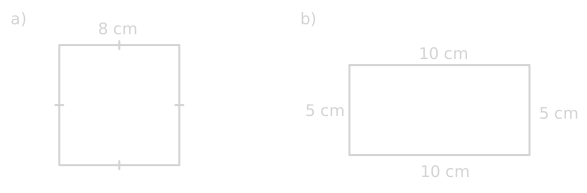
Find the perimeter of each shape.
a) A square with side length
b) A rectangle with length
Problem 2
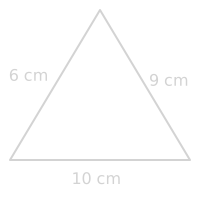
A triangle has side lengths
Problem 3
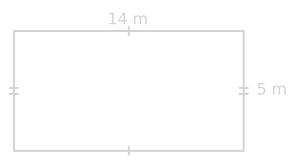
A rectangle has one long side labelled
Problem 4
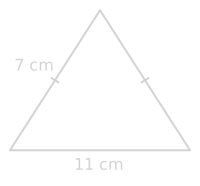
An isosceles triangle has two equal sides marked. One of the equal sides is
Problem 5
A pentagon has side lengths
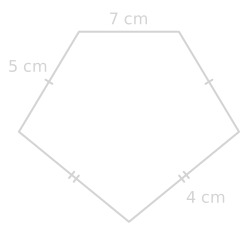
Problem 6
An L-shaped figure has outside side lengths
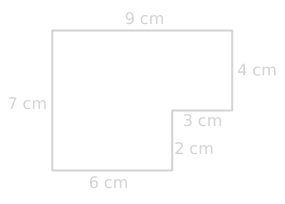
Exercises
Understanding and Fluency
Exercise 1.
Decide whether each statement describes perimeter.
a) The distance around the outside of a shape
b) The amount of space inside a shape
c) Adding all outside side lengths
Exercise 2.
Find the perimeter of each shape.
a) A square with side length
b) A square with side length
c) A square with side length
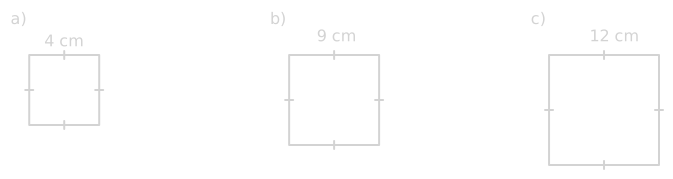
Exercise 3.
Find the perimeter of each rectangle.
a) Length
b) Length
c) Length
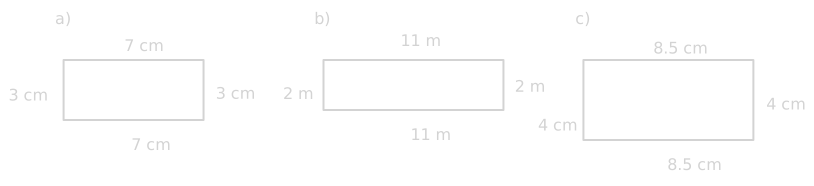
Exercise 4.
Find the perimeter of each triangle.
a) Sides
b) Sides
c) Sides
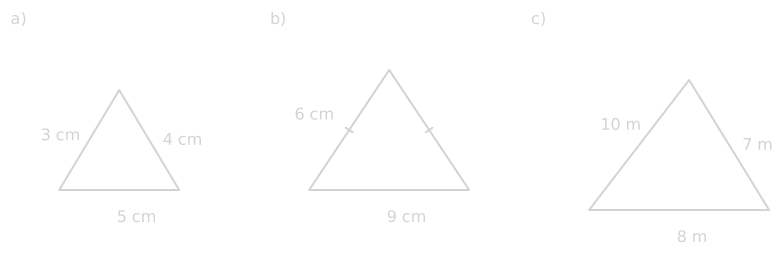
Exercise 5.
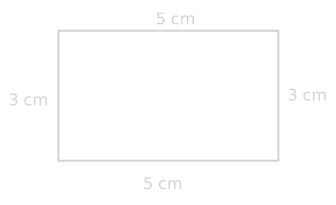
Equal side marks show some sides are the same length. Find each perimeter.
a) A rectangle with one side
b) An isosceles triangle with equal sides
c) A kite with side lengths
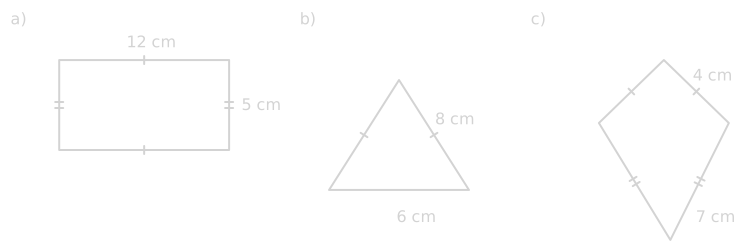
Exercise 6.
Find the perimeter of each shape.
a) A pentagon with side lengths
b) A hexagon with all sides
c) A quadrilateral with side lengths
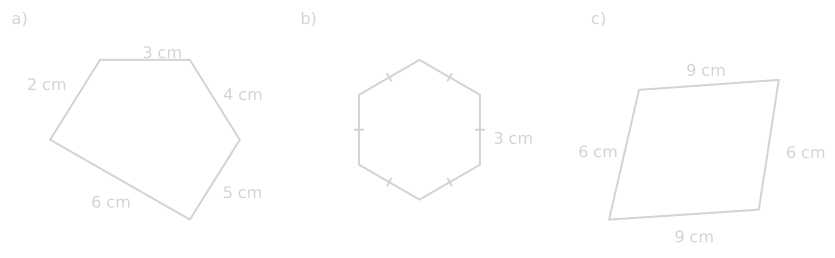
Exercise 7.
Find each perimeter.
a) A shape with sides
b) A triangle with sides
c) A rectangle with sides
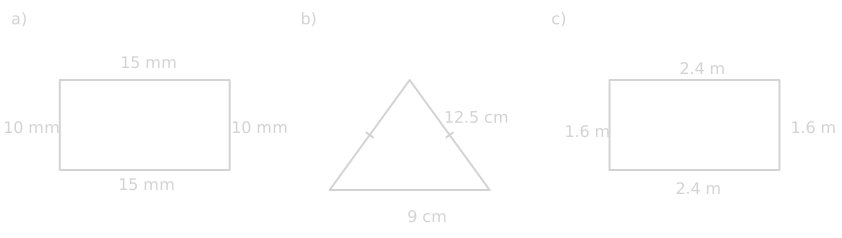
Exercise 8.
An object does not start at zero on a ruler. Its side lengths are measured as
Reasoning
Exercise 9.
Explain why perimeter is found by adding side lengths, not by multiplying all of them together.
Exercise 10.
A student says that equal side marks are just decoration and do not affect the calculation. Explain why this is incorrect.
Exercise 11.
A rectangle has one side labelled
Exercise 12.
A student finds the perimeter of a triangle with sides
Problem-solving
Exercise 13.
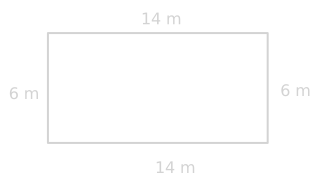
A garden bed is rectangular with length
Exercise 14.
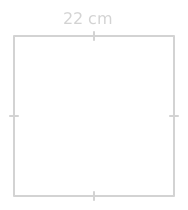
A picture frame is a square with side length
Exercise 15.
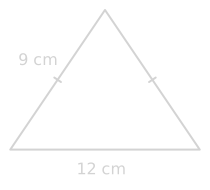
A triangular sign has two equal sides of
Exercise 16.
A running track is made in the shape of a rectangle with length
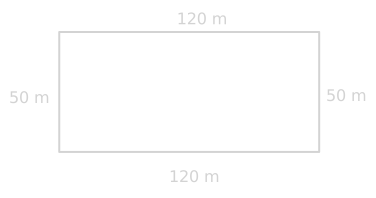
Exercise 17.
A pentagonal badge has side lengths
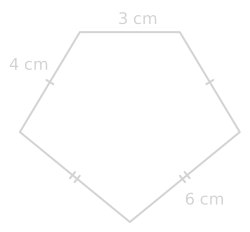
Exercise 18.
A floor plan shows an L-shaped room with outside side lengths
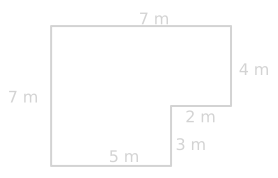
Potential Misunderstandings
- A student may confuse perimeter with area and think perimeter measures the space inside a shape
- A student may add only some of the side lengths instead of all outside edges
- A student may ignore equal side marks and treat unlabelled matching sides as unknown
- A student may think equal side marks mean the sides are parallel rather than equal in length
- A student may Use the same number twice incorrectly, even when side marks do not show equality
- A student may forget to include all outer sides of a composite shape such as an L-shape
- A student may make arithmetic errors when adding several side lengths
- A student may leave the answer without units or use the wrong unit