064. Translations of Shapes and Points
Learning Intentions
- To understand that a shape can be translated left, right, up or down
- Draw the result of a point or shape being translated in a given direction
- Describe a translation given an original point/shape and an image point/shape
Pre-requisite Summary
- Understand that a point can be located on a grid or coordinate plane
- Be able to count horizontal and vertical movements accurately
- Know that left and right describe horizontal movement
- Know that up and down describe vertical movement
- Understand that a shape is translated by sliding, not turning or flipping
- Know that the size, shape and orientation stay the same during a translation
- Be able to match corresponding points on an original shape and its image
- Be able to describe movement Use words such as “
units right” or “ units down”
Worked Examples
Worked Example 1
a) Explain what a translation is.
b) Describe what happens to a shape when it is translated
c) State what stays the same during the translation.
Worked Example 2
A point
a) Describe the movement.
b) Draw the image point
c) Explain how you know the new position is correct.
Worked Example 3
A triangle is translated
a) Describe how each vertex moves.
b) Draw the image of the triangle.
c) State whether the orientation of the triangle changes.
Worked Example 4
A rectangle is translated
a) Describe the translation.
b) Draw the image of the rectangle.
c) Explain why the translated image is congruent to the original.
Worked Example 5
Point
a) Describe the translation from
b) State the horizontal movement.
c) State the vertical movement.
Worked Example 6
A shape and its image are shown on a grid.
a) Choose one vertex and compare it with its image.
b) Describe the translation using horizontal and vertical movement.
c) Check that the same translation works for every vertex.
Problems
Problem 1
a) Explain what a translation is.
b) Describe what happens to a shape when it is translated
c) State what stays the same during the translation.
Problem 2
A point
a) Describe the movement.
b) Draw the image point
c) Explain how you know the new position is correct.
Problem 3
A square is translated
a) Describe how each vertex moves.
b) Draw the image of the square.
c) State whether the orientation of the square changes.
Problem 4
A parallelogram is translated
a) Describe the translation.
b) Draw the image of the parallelogram.
c) Explain why the translated image is congruent to the original.
Problem 5
Point
a) Describe the translation from
b) State the horizontal movement.
c) State the vertical movement.
Problem 6
A shape and its image are shown on a grid.
a) Choose one vertex and compare it with its image.
b) Describe the translation using horizontal and vertical movement.
c) Check that the same translation works for every vertex.
Exercises
Understanding and Fluency
Exercise 1.
Describe each translation in words:
a)
b)
c)
Exercise 2.
State what happens in a translation:
a) to the size of the shape
b) to the orientation of the shape
c) to the position of the shape
Exercise 3.
Translate each point as directed:
a)
b)
c)
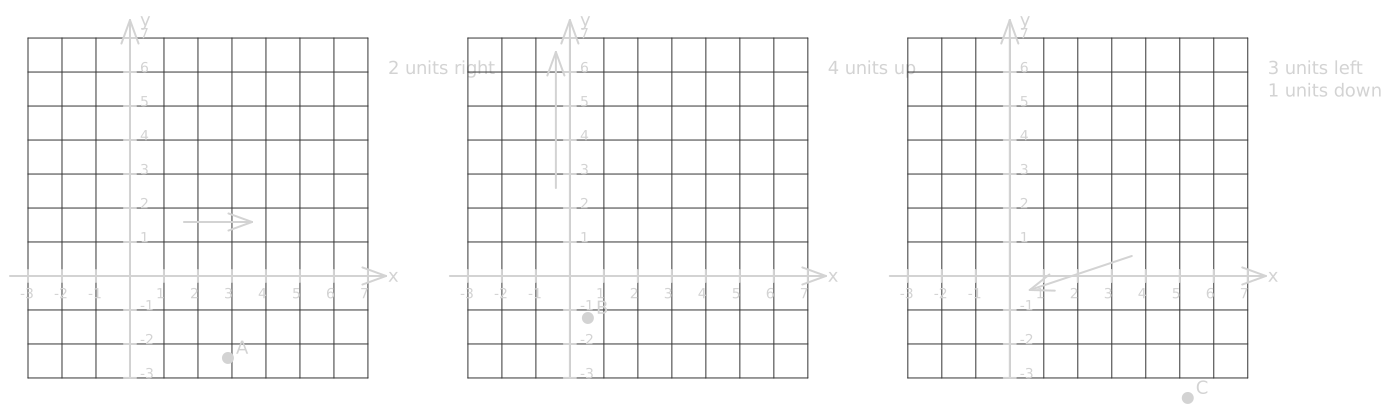
Exercise 4.
Translate each point as directed:
a)
b)
c)
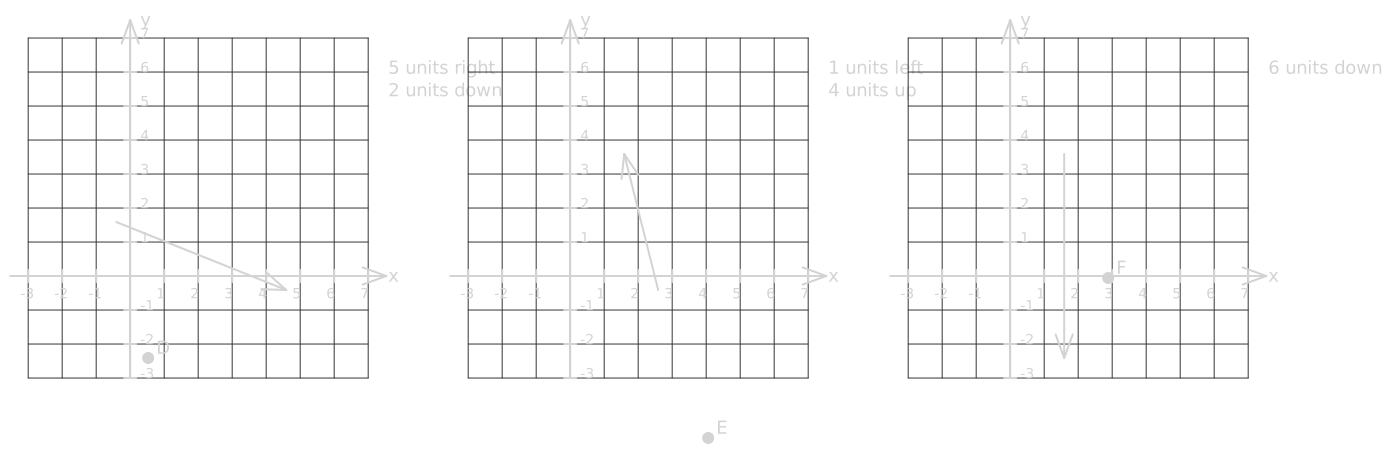
Exercise 5.
Draw the image of each shape after translation:
a) a triangle translated
b) a square translated
c) a rectangle translated
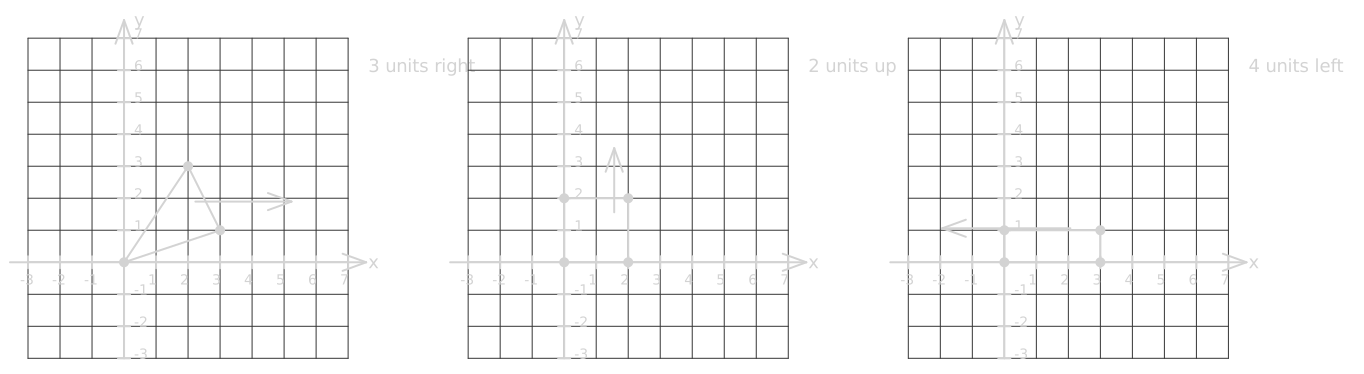
Exercise 6.
Draw the image of each shape after translation:
a) a pentagon translated
b) a trapezium translated
c) a triangle translated
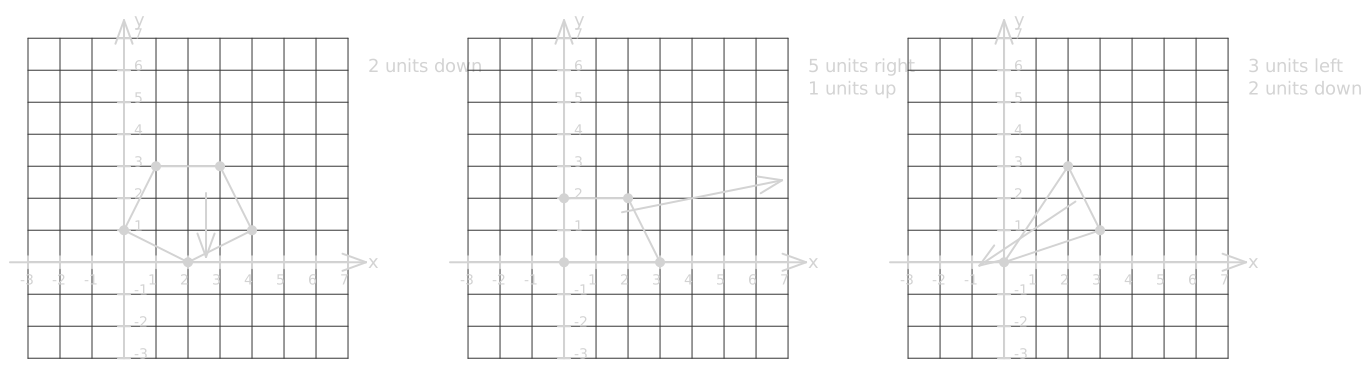
Exercise 7.
Describe the translation from the original to the image:
a)
b)
c)
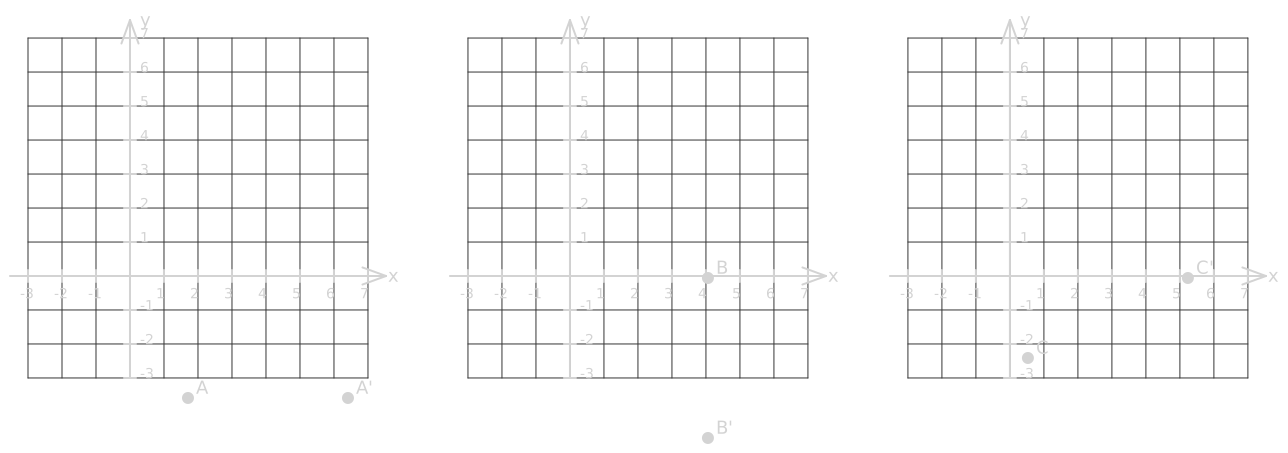
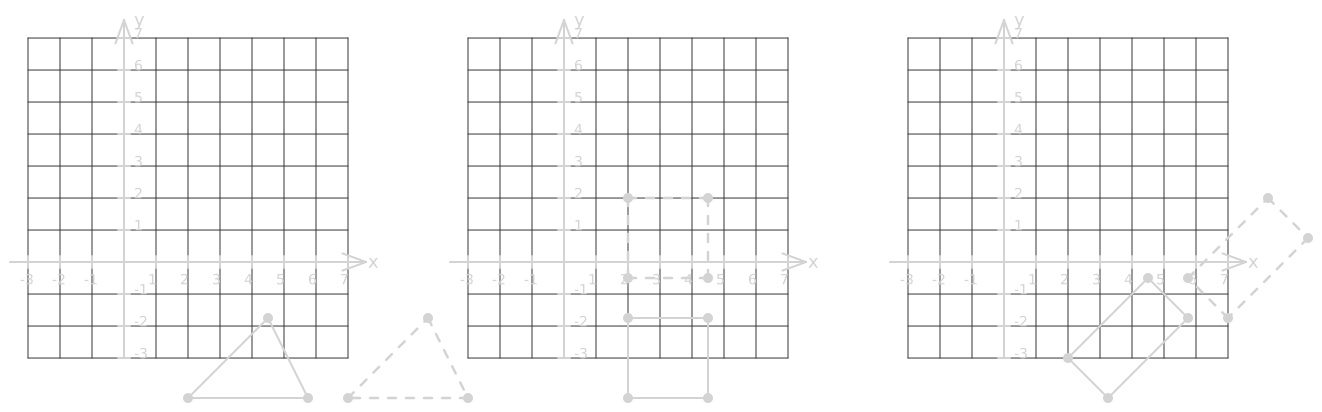
Exercise 8.
Describe the translation from the original shape to the image shape:
a) horizontal movement only
b) vertical movement only
c) both horizontal and vertical movement
Reasoning
Exercise 9.
Explain why a translation is sometimes called a “slide”.
Exercise 10.
A student says a translated shape can turn as it moves. Explain the mistake.
Exercise 11.
Explain why corresponding vertices must all move the same distance and in the same direction in a translation.
Exercise 12.
A student describes a translation as “
Problem-solving
Exercise 13.
A logo is moved
Exercise 14.
A point on a treasure map is moved
Exercise 15.
A triangle is copied and slid
Exercise 16.
A classroom floor plan shows a desk shape translated
Exercise 17.
A shape and its image are shown on a coordinate grid. One vertex moves from
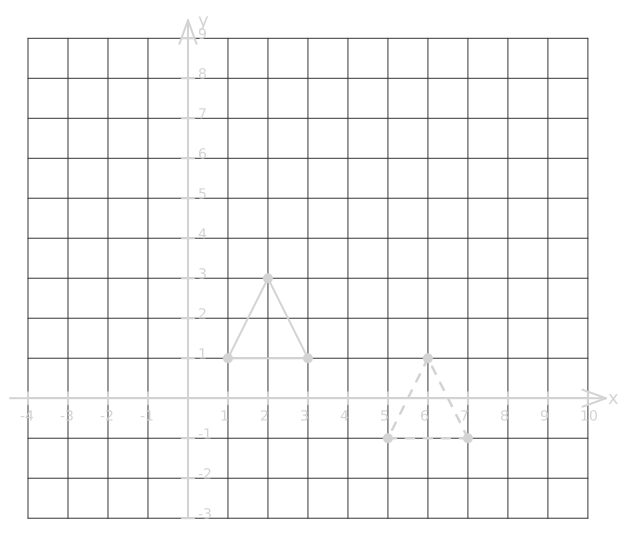
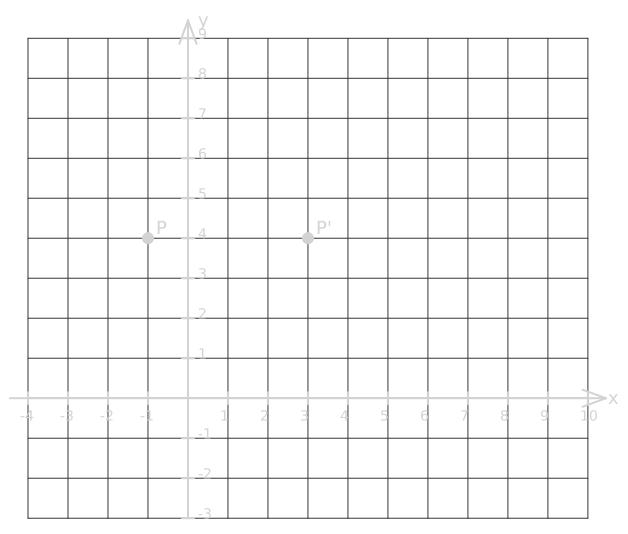
Exercise 18.
A point moves from
Potential Misunderstandings
- Students may think a translation changes the size of a shape
- Students may think a translation can include turning or flipping
- Students may move different vertices by different amounts
- Students may confuse left and right on a grid
- Students may confuse up and down on a grid
- Students may describe only the distance moved and forget to include the direction
- Students may compare non-corresponding vertices when describing a translation
- Students may not Recognise that the orientation of the shape remains unchanged in a translation