167. Two-Way Tables and Venn Diagrams
Learning Intentions
- Understand that two-way tables and Venn diagrams can be used to show the number of possible outcomes when two different events are considered
- Understand that ‘or’ can mean ‘inclusive or’ or ‘exclusive or’ depending on the context or wording
- Draw a Venn diagram from a worded situation
- Construct a two-way table from a worded situation
Pre-requisite Summary
- Data can be organised into groups based on whether items have certain attributes
- A set is a collection of objects or values
- A Venn diagram uses overlapping circles to show how sets are related
- A two-way table organises data Use two different categories at the same time
- The total number in all regions or cells must add to the overall total
- Some items may belong to both sets, one set only, or neither set
- The word “or” can include both possibilities or only one, depending on the wording
- Careful reading of a worded situation is needed before filling in a diagram or table
Worked Examples
Worked Example 1
A class of
Construct a Venn diagram.
Worked Example 2
A group of
Construct a Venn diagram and Solve how many do neither.
Worked Example 3
In a survey of
Construct a two-way table.
Worked Example 4
In a survey of
Explain the difference between:
a) tea or coffee
b) tea or coffee, but not both
Worked Example 5
A class of
Construct a Venn diagram and find how many study French or Music.
Worked Example 6
A survey records whether students are in Year
There are
There are
Construct a two-way table.
Problems
Problem 1
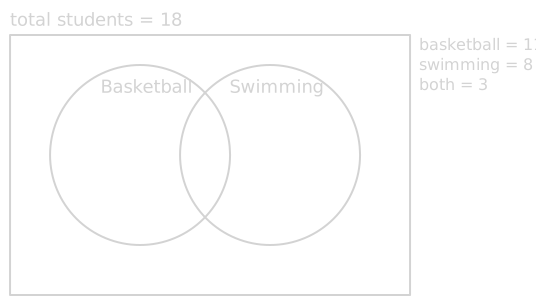
A class of
Construct a Venn diagram.
Problem 2
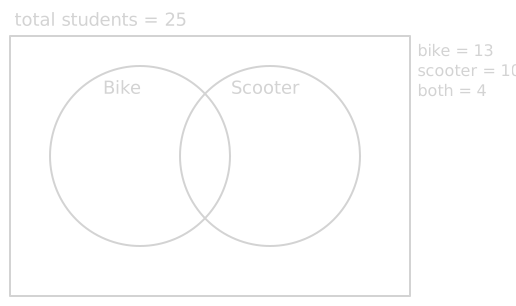
A group of
Construct a Venn diagram and find how many have neither.
Problem 3
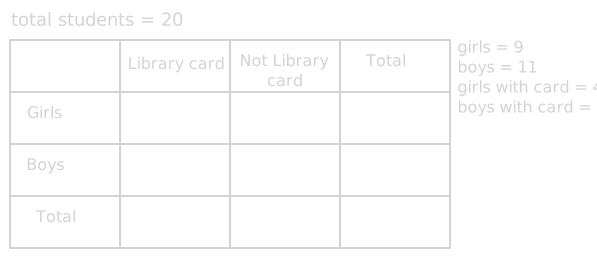
In a survey of
Construct a two-way table.
Problem 4
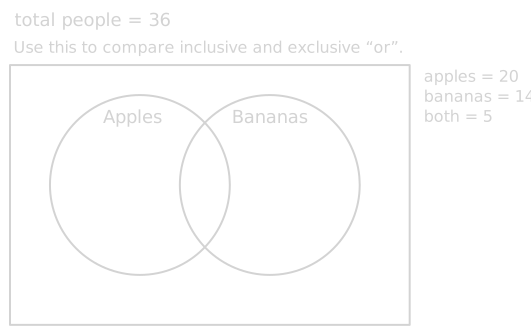
In a survey of
Explain the difference between:
a) apples or bananas
b) apples or bananas, but not both
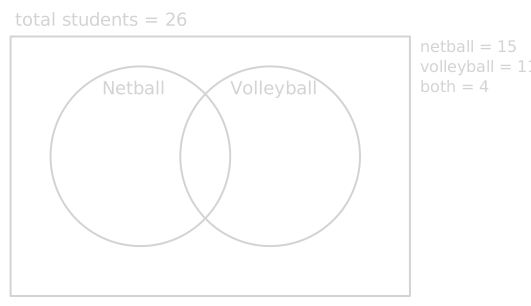
Problem 5
A class of
Construct a Venn diagram and find how many play netball or volleyball.
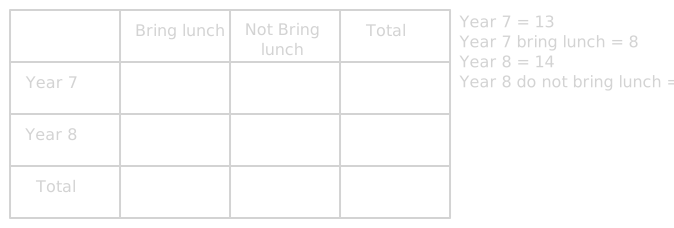
Problem 6
A survey records whether students are in Year
There are
There are
Construct a two-way table.
Exercises
Understanding and Fluency
Exercise 1.
For each statement, decide whether a Venn diagram or a two-way table would be more suitable.
a) students who play soccer and/or tennis
b) students grouped by year level and by whether they wear glasses
c) people who like tea and coffee
Exercise 2.
In each case, State whether “or” is inclusive or exclusive.
a) students who study Art or Music
b) Choose soup or salad with your meal
c) numbers that are even or multiples of
Exercise 3.
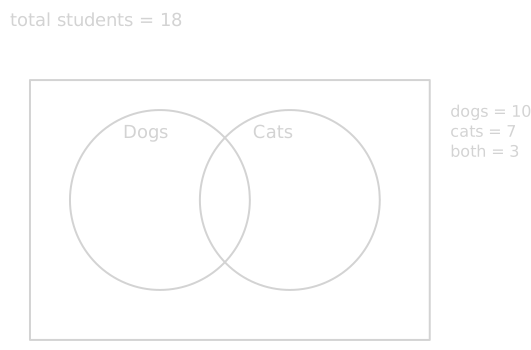
A class of
Complete a Venn diagram by finding:
a) dogs only
b) cats only
c) neither
Exercise 4.
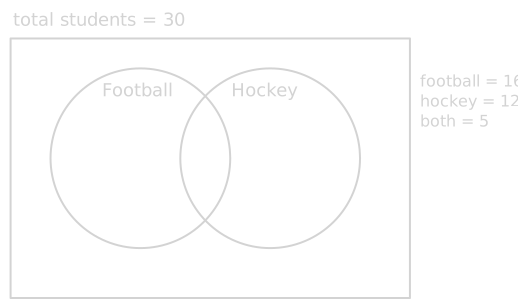
A group of
Complete a Venn diagram by finding:
a) football only
b) hockey only
c) football or hockey
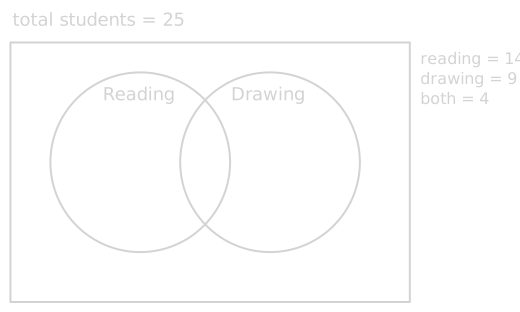
Exercise 5.
Construct a Venn diagram for this situation.
In a class of
Exercise 6.
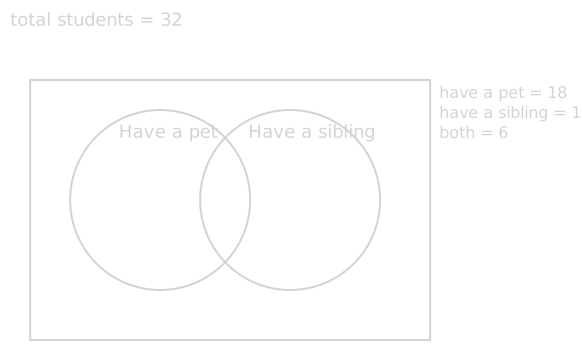
Construct a Venn diagram for this situation.
In a survey of
Also find how many have neither.
Exercise 7.
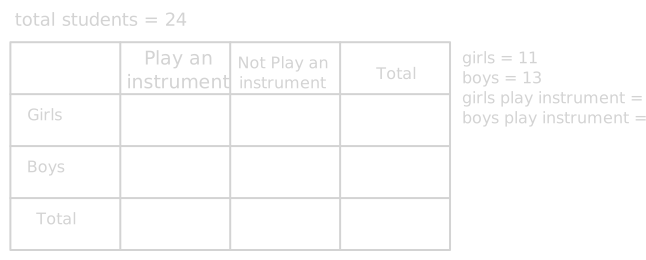
Construct a two-way table for this situation.
In a survey of
Exercise 8.
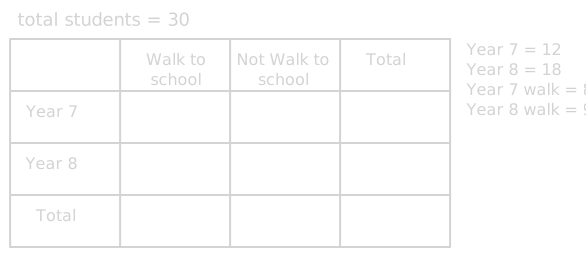
Construct a two-way table for this situation.
In a group of
Exercise 9.
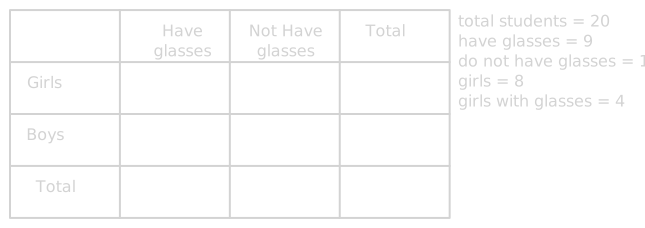
A class survey gives the following information:
Construct a two-way table.
Exercise 10.
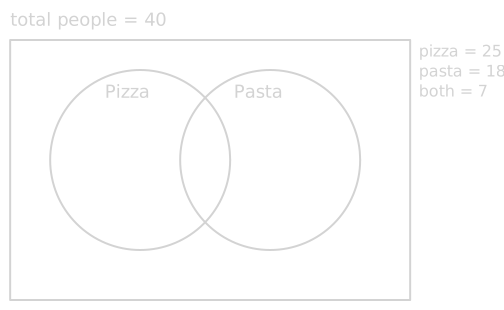
A survey of
Find:
a) pizza only
b) pasta only
c) pizza or pasta
d) pizza or pasta, but not both
Reasoning
Exercise 11.
Explain why the overlap in a Venn diagram represents items that belong to both sets.
Exercise 12.
A student adds
Exercise 13.
Explain the difference between inclusive or and exclusive or using your own example.
Exercise 14.
Explain why the row totals and column totals in a two-way table should agree with the overall total.
Exercise 15.
A student places the number for “both” outside the overlap in a Venn diagram. Explain why this is incorrect.
Problem-solving
Exercise 16.
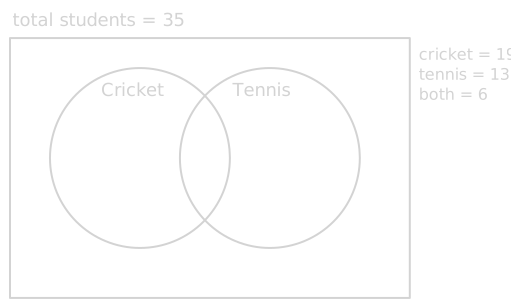
In a class of
a) Construct a Venn diagram
b) Find how many play neither sport
c) Find how many play cricket or tennis
Exercise 17.
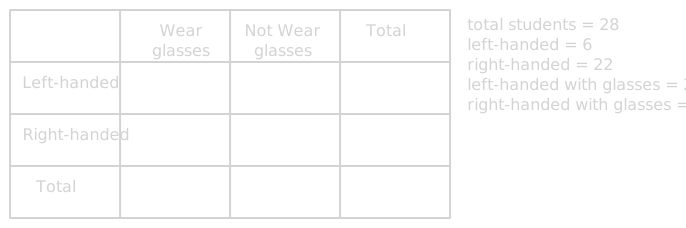
A survey records whether students are left-handed or right-handed, and whether they wear glasses.
There are
Construct a two-way table.
Exercise 18.
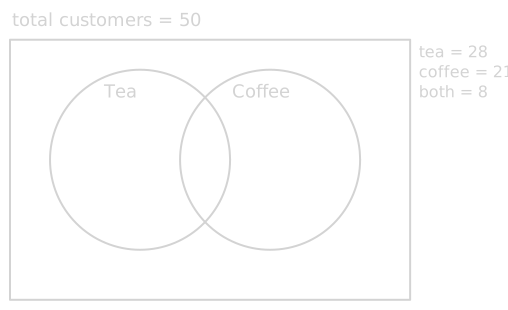
A café survey shows that out of
a) Construct a Venn diagram
b) Find how many buy tea or coffee
c) Find how many buy neither
Exercise 19.
A club asks members whether they play chess, cards, or both.
Explain whether the word “or” in “chess or cards” is inclusive or exclusive, and justify your answer in this context.
Exercise 20.
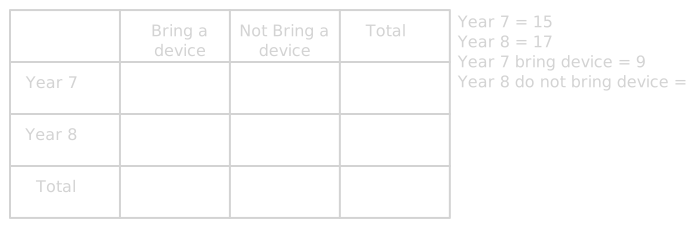
A school survey groups students by whether they are in Year
There are
Construct a two-way table and find the total number of students who bring a device.
Potential Misunderstandings
- Thinking a Venn diagram and a two-way table always show different totals
- Forgetting that the overlap in a Venn diagram represents items in both sets
- Adding both set totals without subtracting the overlap when finding an inclusive “or”
- Confusing inclusive or with exclusive or
- Assuming the word “or” always excludes “both”
- Placing values into a two-way table without checking that row and column totals are consistent
- Forgetting to include the “neither” region in a Venn diagram when there is an overall total
- Treating “both” as belonging to one set only instead of the intersection
- Mixing up row labels and column labels in a two-way table
- Forgetting that all regions or cells must add to the total number in the situation
Next: 168r. Reviewing Experimental Probability and Simulation