073r. Describing the Likelihood of Events
Learning Intentions
- To understand that we can Describe the likelihood of events Use phrases such as ‘even chance’, ‘unlikely’ and ‘certain’
- describe the likelihood of an event
Pre-requisite Summary
- Understand that an event is something that may or may not happen
- Be able to Identify possible outcomes in a simple situation
- Know that some events happen more often than others
- Understand everyday words such as impossible, unlikely, even chance, likely and certain
- Be able to compare events as less likely, equally likely or more likely
- Recognise that likelihood can be described without calculating exact probabilities
Worked Examples
Worked Example 1
a) Explain the meaning of the terms impossible, unlikely, even chance, likely and certain.
b) Put these terms in order from least likely to most likely.
Worked Example 2
A fair coin is tossed.
a) Describe the likelihood of getting heads.
b) Describe the likelihood of getting tails.
c) Explain why these events have an even chance.
Worked Example 3
A bag contains
a) Describe the likelihood of picking a red counter.
b) Describe the likelihood of picking a blue counter.
c) Explain which event is more likely.
Worked Example 4
A standard die is rolled.
a) Describe the likelihood of rolling a
b) Describe the likelihood of rolling a number less than
c) Describe the likelihood of rolling an even number.
Worked Example 5
A spinner has
a) Describe the likelihood of landing on green.
b) Describe the likelihood of landing on yellow.
c) Explain why one event is likely and the other is unlikely.
Worked Example 6
For each event, describe the likelihood:
a) the sun rising tomorrow
b) choosing a letter A from the word CAT
c) choosing a vowel from the word DOG
Problems
Problem 1
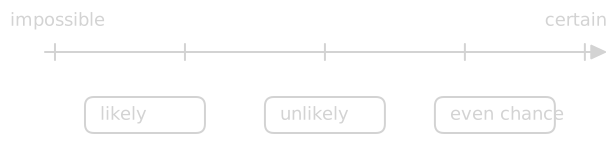
a) Explain the meaning of the terms impossible, unlikely, even chance, likely and certain.
b) Put these terms in order from least likely to most likely.
Problem 2
A fair coin is tossed.
a) Describe the likelihood of getting heads.
b) Describe the likelihood of getting tails.
c) Explain why these events have an even chance.

Problem 3
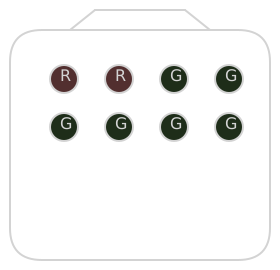
A bag contains
a) Describe the likelihood of picking a red counter.
b) Describe the likelihood of picking a green counter.
c) Explain which event is more likely.
Problem 4
A standard die is rolled.
a) Describe the likelihood of rolling an
b) Describe the likelihood of rolling a number greater than
c) Describe the likelihood of rolling an odd number.

Problem 5
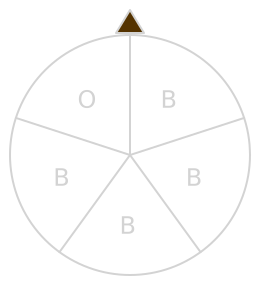
A spinner has
a) Describe the likelihood of landing on blue.
b) Describe the likelihood of landing on orange.
c) Explain why one event is likely and the other is unlikely.
Problem 6
Exercises
Understanding and Fluency
Exercise 1.
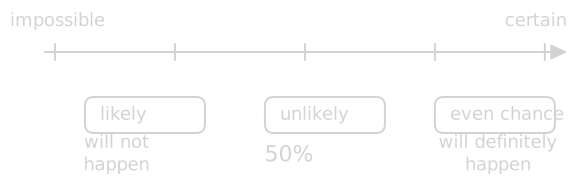
State the likelihood word that best matches each description:
a) will not happen
b) has a
c) will definitely happen
Exercise 2.
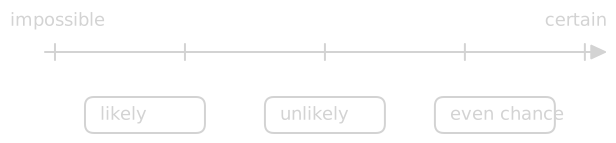
Put these likelihood words in order from least likely to most likely:
a) likely
b) impossible
c) certain
d) unlikely
e) even chance
Exercise 3.
Describe the likelihood of each event:
a) rolling a
b) rolling a
c) rolling a number less than

Exercise 4.
Describe the likelihood of each event:
a) getting heads when flipping a fair coin
b) getting tails when flipping a fair coin
c) getting both heads and tails on one flip

Exercise 5.
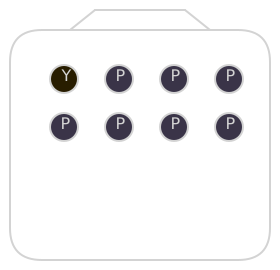
A bag contains
a) picking yellow
b) picking purple
c) not picking purple
Exercise 6.
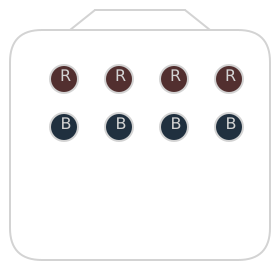
A bag contains
a) picking red
b) picking blue
c) picking either red or blue
Exercise 7.
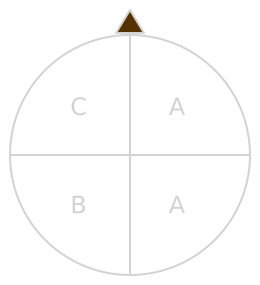
A spinner has equal sections labelled A, A, B, C. Describe the likelihood of:
a) landing on A
b) landing on B
c) not landing on C
Exercise 8.
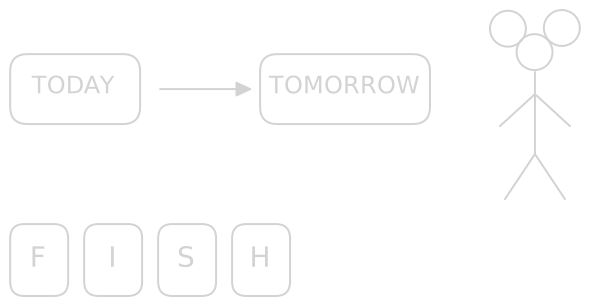
Describe the likelihood of each everyday event:
a) tomorrow coming after today
b) a person having
c) drawing a vowel from the word FISH
Reasoning
Exercise 9.
Explain why getting heads on a fair coin is an even chance.
Exercise 10.
A student says rolling a
Exercise 11.
Explain why an event can be unlikely without being impossible.
Exercise 12.
A student says that if an event is likely, it is certain. Explain why this is incorrect.
Problem-solving
Exercise 13.
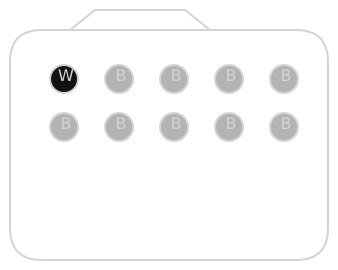
A jar contains
Exercise 14.
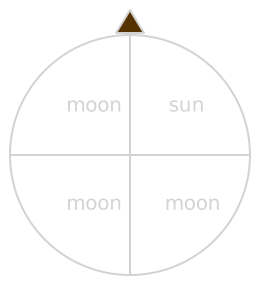
A game uses a spinner with equal sections labelled sun, moon, moon, moon. Describe the likelihood of landing on moon.
Exercise 15.
A card is chosen from the letters in the word MATHS. Describe the likelihood of choosing a vowel.

Exercise 16.
A bag contains
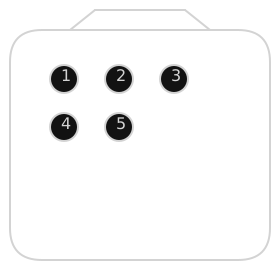
Exercise 17.
A weather report says there is no chance of snow in Brisbane today. Which likelihood word best describes snow today?

Exercise 18.
A raffle ticket is drawn from a box with

Potential Misunderstandings
- Students may think unlikely means impossible
- Students may think likely means certain
- Students may confuse even chance with likely
- Students may describe an event without considering all possible outcomes
- Students may Use everyday language loosely rather than choosing the best likelihood word
- Students may think an event with one possible successful outcome is always unlikely, even when there are very few outcomes in total